The Leica M10 Monochrom is still my natural territory. It asks for patience, precision, and that stubborn little pause before pressing the shutter, as if the world owed me one more second of clarity. But now there is a second camera in my daily life: the Ricoh GR IV Monochrome. Small, fast, almost insolently practical. The kind of camera that does not ask for ceremony. It asks whether you are awake.
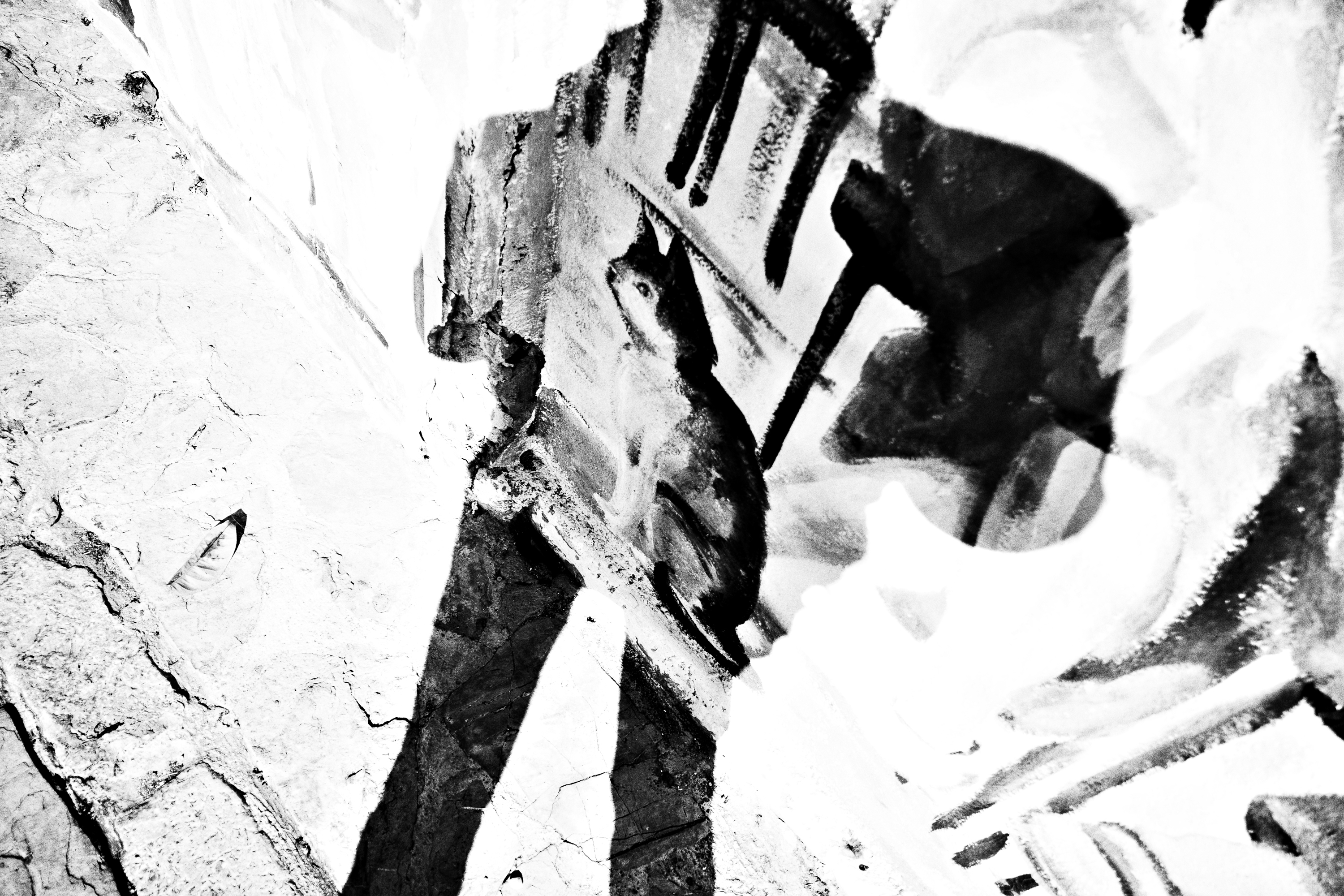
One of the things I like most about the Ricoh is that it can hold three custom programs. My U3 is where I let the polite version of myself step aside. It is a recipe built to photograph in a completely different way: raw, impulsive, direct to JPG, with no interest in behaving nicely. It is my Provoke mode. Less control, more instinct. Less refinement, more friction. A way of working that accepts blur, harsh contrast, broken texture, visual violence. In other words, reality when it stops pretending to be elegant.
This photograph is one of the first pieces I made with that approach. I was not trying to describe a wall. I was trying to collide with it. Light, shadow, rough surface, graffiti, fragments that almost refuse to become legible. The image does not explain itself, which is refreshing in a world where everything seems desperate to be understood in three seconds. It is not tidy, not balanced, not obedient. Good. Street photography does not need more obedience.
So which of these two styles is more mine? The careful, deliberate monochrome of the Leica, or the harsher, immediate language of the Ricoh in U3? The answer is inconveniently simple: both. They do not compete. They complement each other. One helps me distill the world. The other helps me attack it. Between the two, I get closer to photographing reality as I actually see it, not as photography manuals think I should. This new line of work also fits the broader StreetSoul push to make the monochrome voice clearer and more visible online.
Leave a Reply