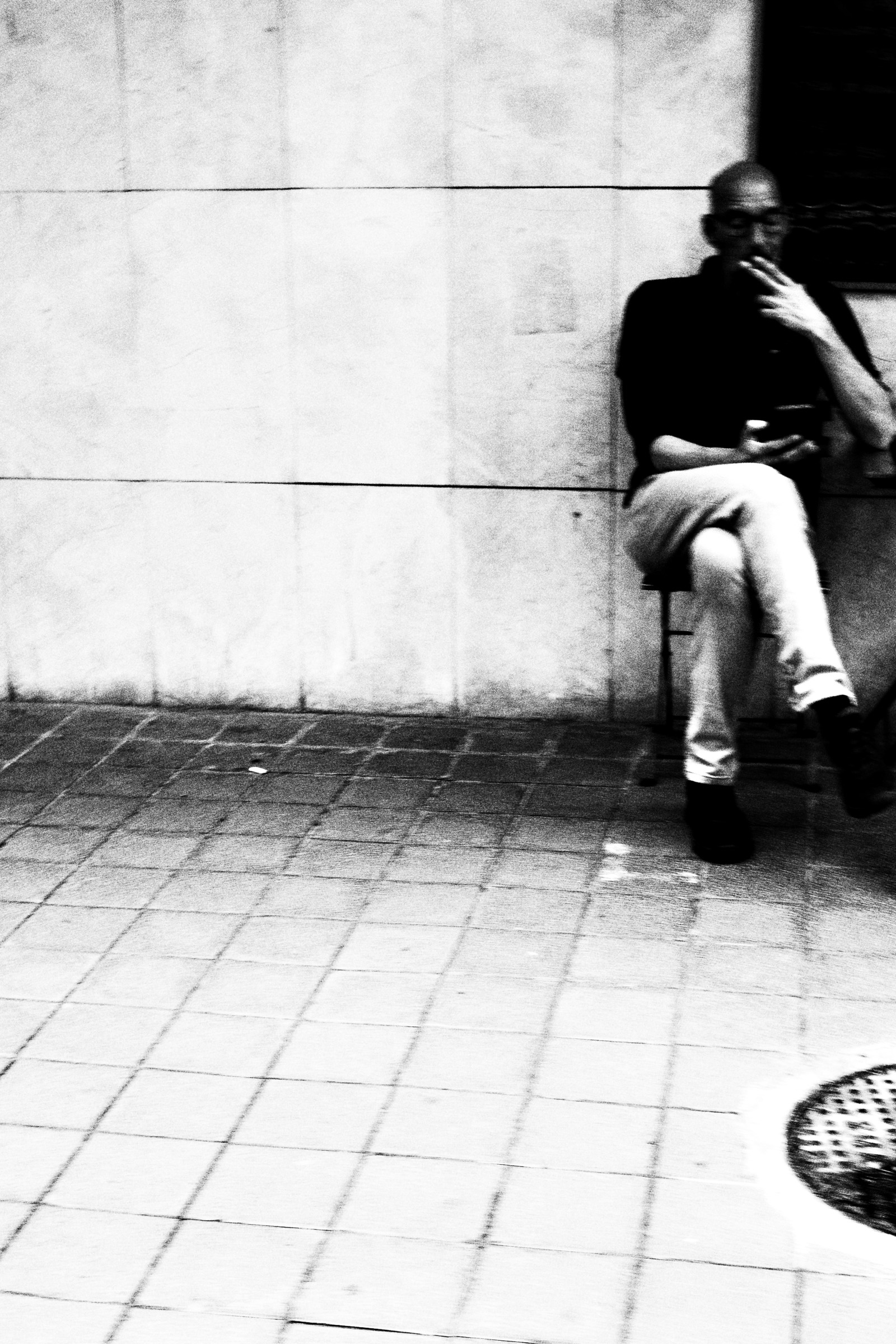


History often reads like a contact sheet edited by cowards.
A few faces are circled in red. The rest are left on the table: blurred, inconvenient, badly timed, not respectable enough, not male enough, not white enough, not easy enough to print. Ask who is underrated in history and the answer is not a clean ranking. It is a drawer full of people who did the work while someone else got the frame.
Claudette Colvin was fifteen when she refused to give up her seat on a segregated bus in Montgomery in 1955, months before Rosa Parks became the name most people remember. Colvin was not a footnote; she later became one of the plaintiffs in the case that helped end bus segregation in Montgomery. But history prefers a neat portrait. Teenagers, anger, poverty, complexity — these things make the picture harder to hang.
Alice Ball was twenty-three when she developed a workable treatment for leprosy using chaulmoogra oil, before antibiotics changed the field. She died young. Other people had more time to stand near her work and look important. Chemistry is not photogenic, especially when the chemist is a young Black woman in early-twentieth-century Hawaiʻi. So the room goes quiet, and the discovery keeps working without applause.
Bayard Rustin helped organize the 1963 March on Washington and advised Martin Luther King Jr. on nonviolent resistance. He also lived openly as a gay man in a movement and a country that punished him for it, which helped push him into the background. The crowd gets remembered. The man who helped build the conditions for the crowd is easier to crop out.
Noor Inayat Khan was a British resistance agent in Nazi-occupied France. For several months in 1943, she was the only British intelligence agent operating in the Paris area, sending wireless messages to London. Captured, imprisoned, and executed at Dachau, she did not give up Allied secrets. Her story does not need embroidery. The facts are already dark enough.
Mary Anning spent her life pulling fossils from the cliffs of Lyme Regis, doing work that helped shape modern science while respectable men owned most of the rooms where science was allowed to speak. The Natural History Museum describes her as a pioneering palaeontologist whose contributions remained relatively unknown until recently. There is something almost comic about that sentence. She found ancient animals. The present took nearly two centuries to find her.
Chien-Shiung Wu led the experiment that overturned the supposed conservation of parity in beta decay. The Nobel Prize went to the theorists Chen Ning Yang and Tsung-Dao Lee. Wu’s name remained attached to the experiment, which is polite; the prize remained unattached to her, which is the usual paperwork of power.
Maybe “underrated” is too soft a word. It sounds like a restaurant review. These people were not merely underrated. They were delayed, thinned, cleaned up, misplaced, or pushed behind a better-lit figure.
History has always loved a central subject. Street photography teaches the opposite: sometimes the truth is the person half-cut by the edge of the frame, the one almost missed, the one who did not turn toward the camera.
The archive is not finished. It just pretends to be.
More Provoke work here.
Leave a Reply