Moscow · Yashica Mat 124G · Absurd World
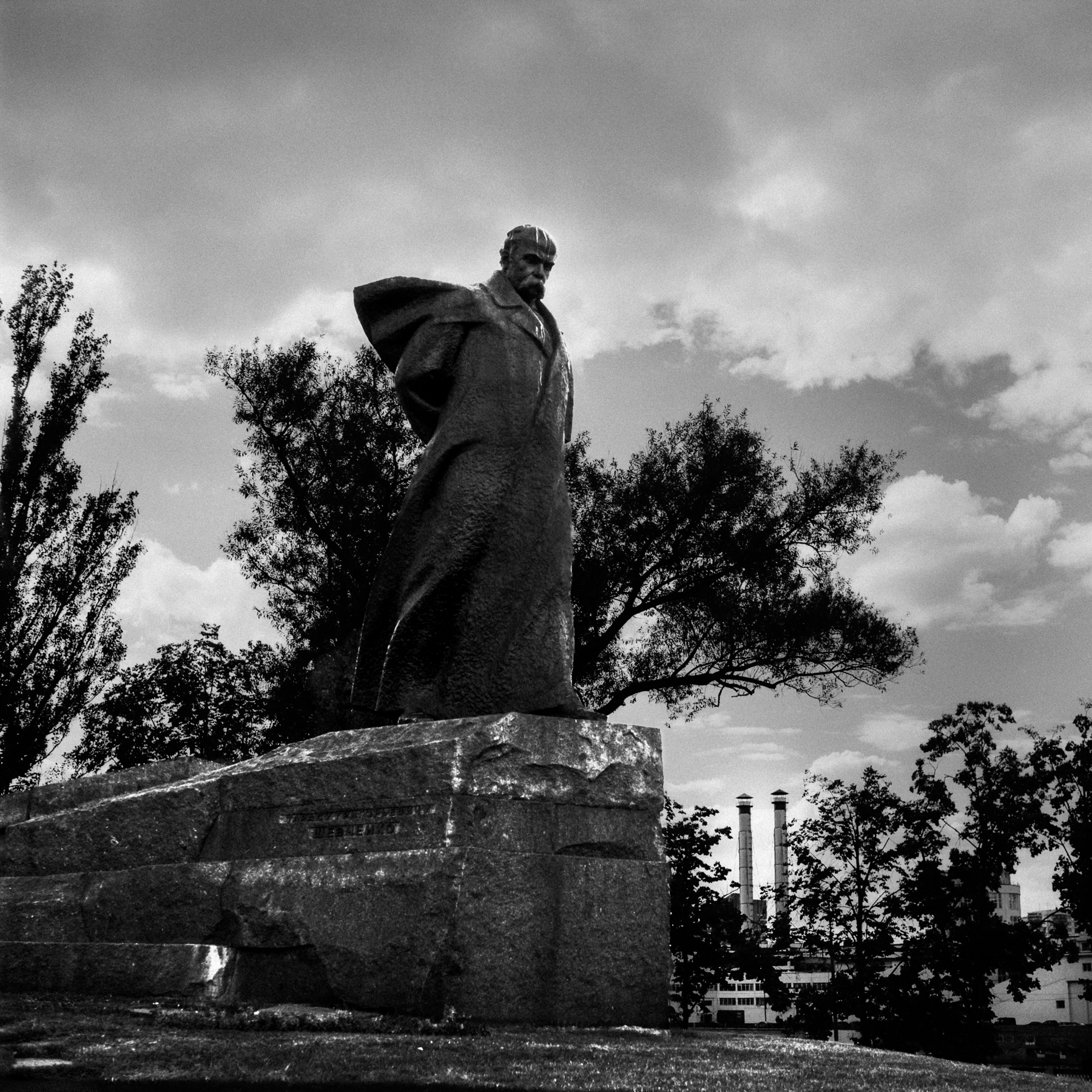
This photograph first appeared as a black mass against the sky. A heavy, almost mute figure standing among trees, clouds and distant chimneys. Public grandeur, nature and industry shared the same frame with the usual lack of subtlety that monuments and cities seem to enjoy.

The original scan had force. Darkness turned the statue into an apparition. It also made the image too closed. The figure swallowed the stone, the pedestal and much of the scene around it. The photograph kept its mystery, but lost its body.
The first pass in Lightroom Classic opened the image. Texture returned to the monument. The base separated from the ground. The figure gained matter again. That created a different risk: too much recovery would make the photograph too readable. This image needed to keep dragging part of its original darkness behind it.

The final version stays in that uneasy place. The statue is no longer just a black shape, yet it has not fully escaped the shadow. The sky keeps its weight. The trees still interfere with the outline. The chimneys in the distance, small and stubborn, cut through any heroic reading of the scene. The monument seems aimed at grandeur; the world around it points to something less noble, more ambiguous and much more real.

The photograph belongs to Absurd World because of that collision. A solemn statue under a sky that feels almost theatrical. Trees eating into its shape. Industrial chimneys appearing in the background like a prosaic footnote in a scene trying to act elevated. The monument wants the centre. The rest of the world refuses to behave. Reality has always been good at ruining speeches.
The edit was never about saving a dark photograph. The decision was narrower and more useful: how much shadow the image should keep. The first version had truth, with too little information. The middle version brought back detail, but weakened the tension. The final image lets the statue return from the dark without granting it a clean exit.
Editing, here, meant deciding which part of the shadow still belonged to the photograph.
More Absurd World here.


Leave a Reply