The kindest thing anyone ever did for me was stay.
It sounds almost too small when I write it like that.
There was nothing to solve. Or maybe there was, but certainly not that day. I don’t remember any important words. I’m not even sure there were many words.
I remember the presence.
Someone sitting there without trying to drag me somewhere better.
People are uncomfortable with that. I am too. When someone is having a bad time, we start looking for things to say. Something useful, something hopeful. We want the machinery running again.
Sometimes it doesn’t run.
So we sit there.
That was what this person did.
No pressure to explain myself. No need to make the situation less awkward. I didn’t have to pretend I was doing better than I was.
And they didn’t leave.
Maybe that’s why it has stayed with me more than other acts of kindness. Gifts disappear. Most advice gets forgotten. Even very sincere words can become strangely vague after a few years.
But I remember somebody being there when there really wasn’t much to be there for.
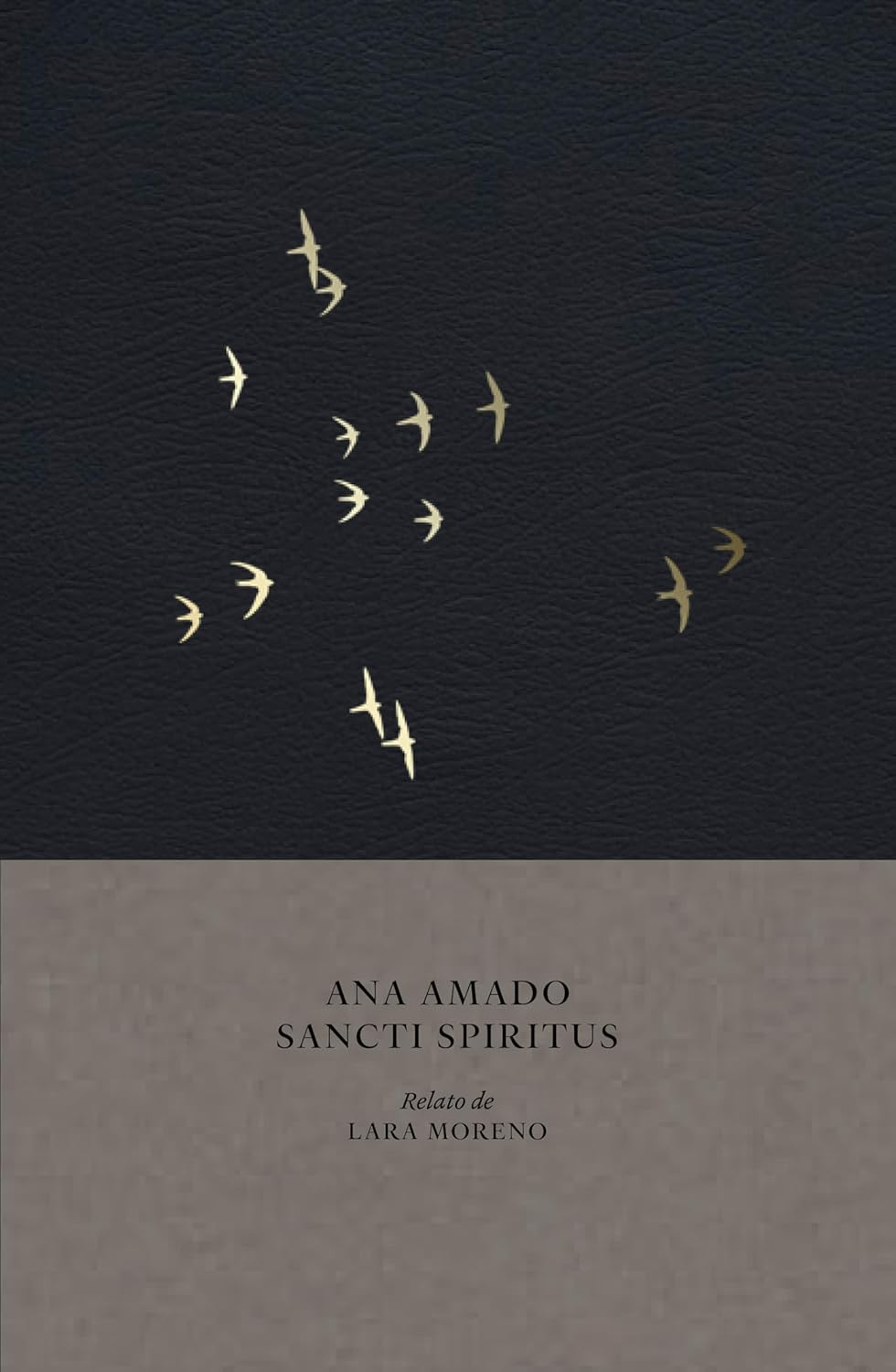
There are photobooks that arrive perfumed with prestige and die on the table after ten minutes. Sancti Spiritus is not one of them. Ana Amado’s book, published by La Fábrica in 2026, gathers 60 images across 128 pages and is accompanied by an unpublished text by Lara Moreno. Its subject is the cloistered Dominican community of the Monasterio de Sancti Spiritus in Toro, Zamora, where Amado lived and photographed for several days after first entering the monastery in 2019.
What thrilled me most is that Amado does not photograph this world as if she were dusting a reliquary. She photographs it as something alive. That matters. Too many books about enclosed, sacred, or supposedly “mysterious” spaces end up embalming their subject under a layer of solemn good taste. Here, the intelligence is elsewhere. The photographs breathe because they accept instability. Slight blur, imperfect focus, unexpected crops, off-centre bodies, frames that look almost stolen rather than ceremonially composed: all of that gives the work pulse. What a novelty—photography that remembers life is untidy.
And yet none of this feels careless. That is the trick, and it is not a minor one. The book has technical control without technical vanity. Amado knows exactly how far she can let an image loosen before it collapses. Her blur is expressive, not decorative. Her casual framings are not the usual fake-spontaneous nonsense that many photographers use when they want to look modern without risking anything. They are decisions. They create the sensation of being inside a lived rhythm rather than in front of a polished thesis about spirituality.
That compositional freedom becomes even more interesting because Amado comes from architecture and has spoken about wanting to move away from idealized, “god’s-eye” imagery toward a closer, human perception of space. In her work, architecture is not a pristine object but the stage on which life happens, and she is also drawn to making the invisible more visible. That is exactly what gives Sancti Spiritus its nerve: cloisters, windows, thresholds, corridors and cells are never just backdrops. They press against the figures, frame their gestures, absorb their silences. Space here has weight, but it also has intimacy.
There is also something deeply elegant in the refusal to overexplain. The book trusts the image. It trusts that a body half seen, a face turned away, a passage cut by shadow, or a moment softened by movement can say more than the blunt literalism of the perfectly descriptive shot. That trust is rare. It requires talent, yes, but also nerve. Most people prefer to show everything and reveal nothing. Amado does the opposite.
I came away from Sancti Spiritus exhilarated. Not because it flatters the eye in the obvious way, but because it understands a harder truth: grace in photography often enters through the side door, a little out of focus, badly centred, and completely sure of itself.
You can purchase this book here with free shipping and a 5% discount.
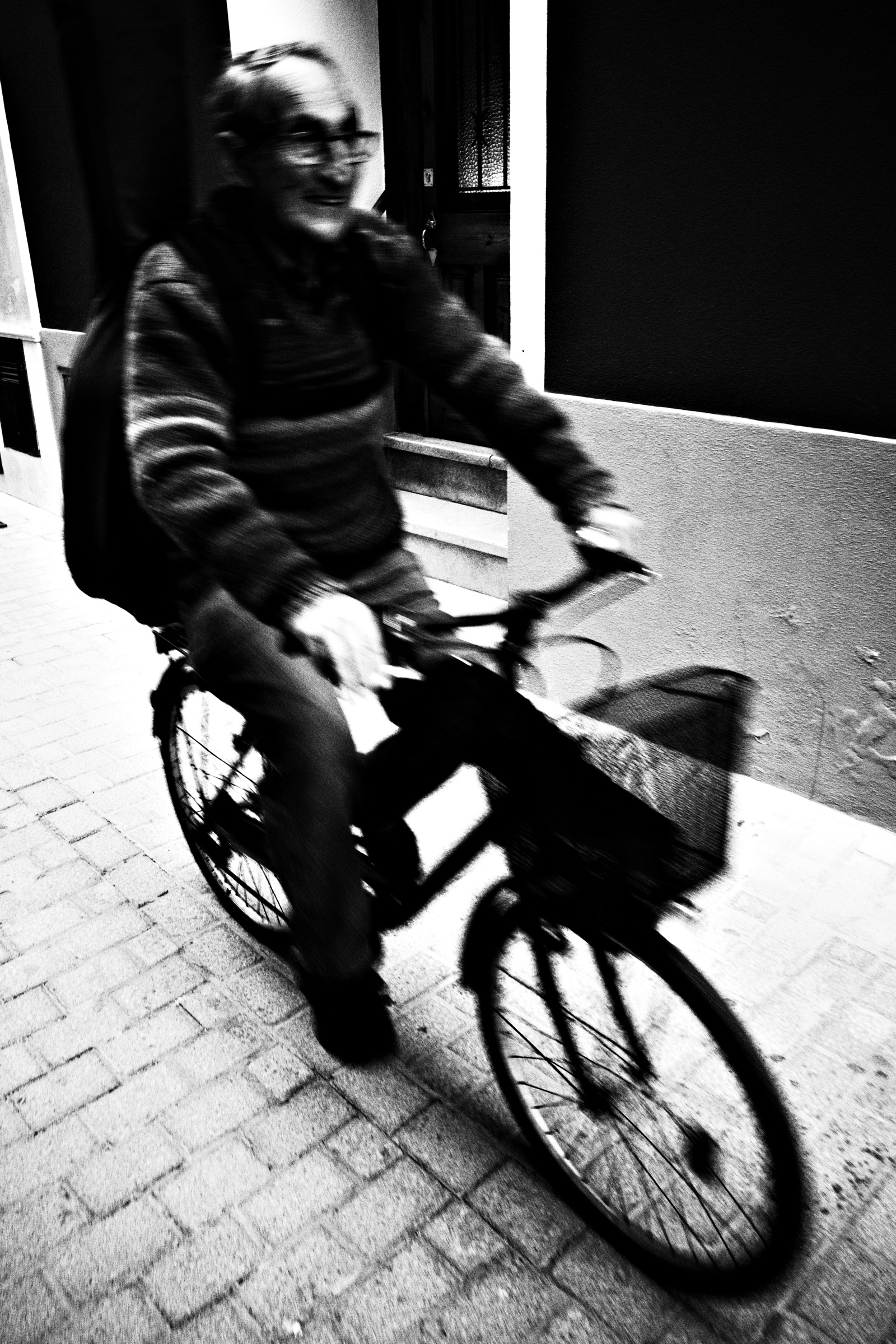
I made this in Ciutadella because the street was almost too well mannered. Clean walls, hard light, the usual old-town theatre pretending to be timeless. Very nice. Very dignified. Very close to becoming dead on arrival.
Then the cyclist came through and saved the thing.
What mattered was not getting him sharp. Sharpness would have killed it. I wanted the smear, the wobble, the face slipping away, the bicycle stretched into a black nervous scribble. The street stays put, like all respectable stonework does. The man does not. That small clash is the photograph.
Places like Ciutadella are dangerous for photographers because they offer beauty cheaply. And cheap beauty usually produces boring pictures for people who enjoy nodding solemnly in front of walls. I’d rather keep the friction. I’d rather have a frame that looks as if life passed through it and refused to pose.
This one is not elegant. Good. Street photography should not always smell of good manners.
Technical note: Ricoh GR IV Monochrome, Provoke-style recipe, hard contrast and blur used on purpose, which is still a scandal to people who worship clean files.
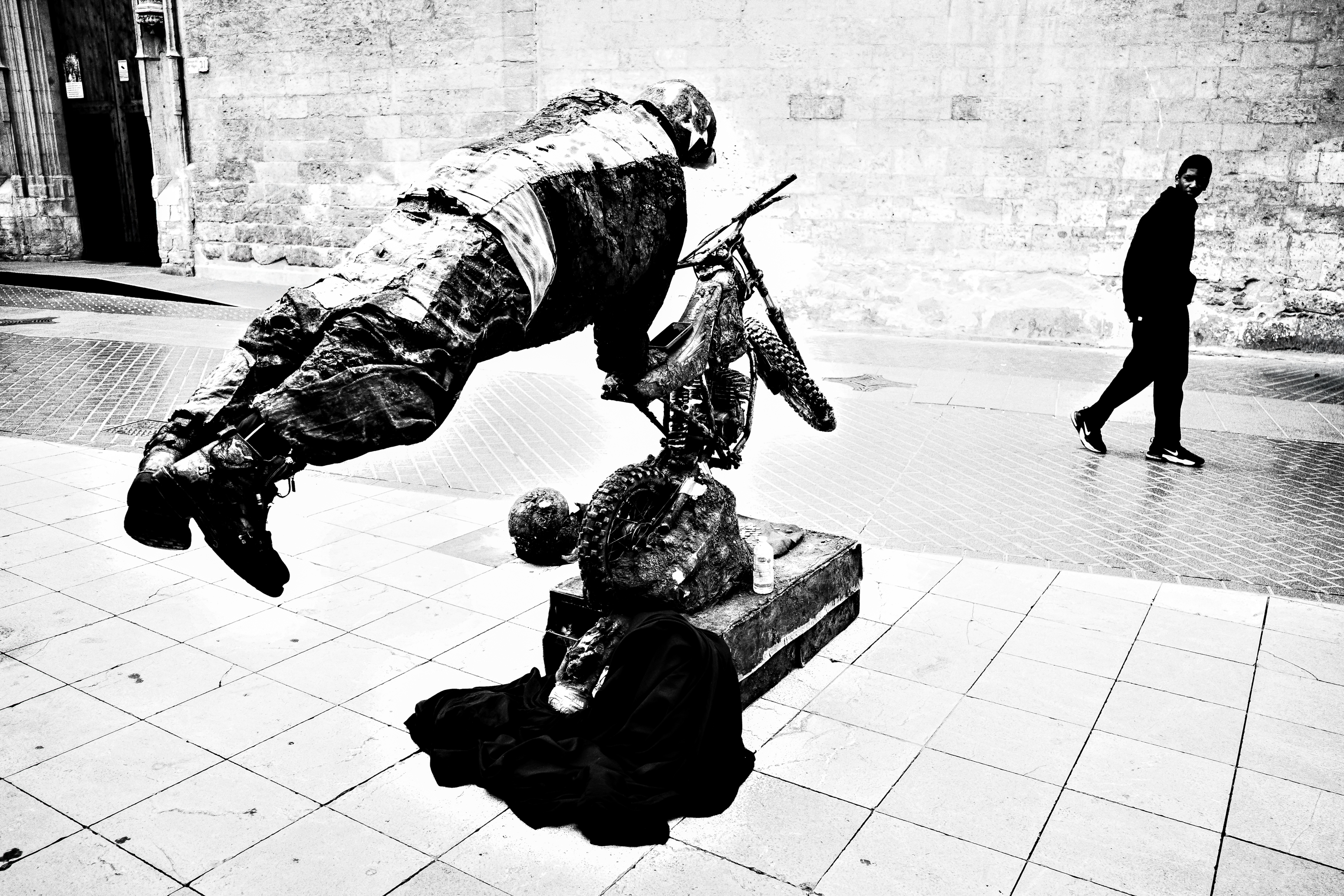
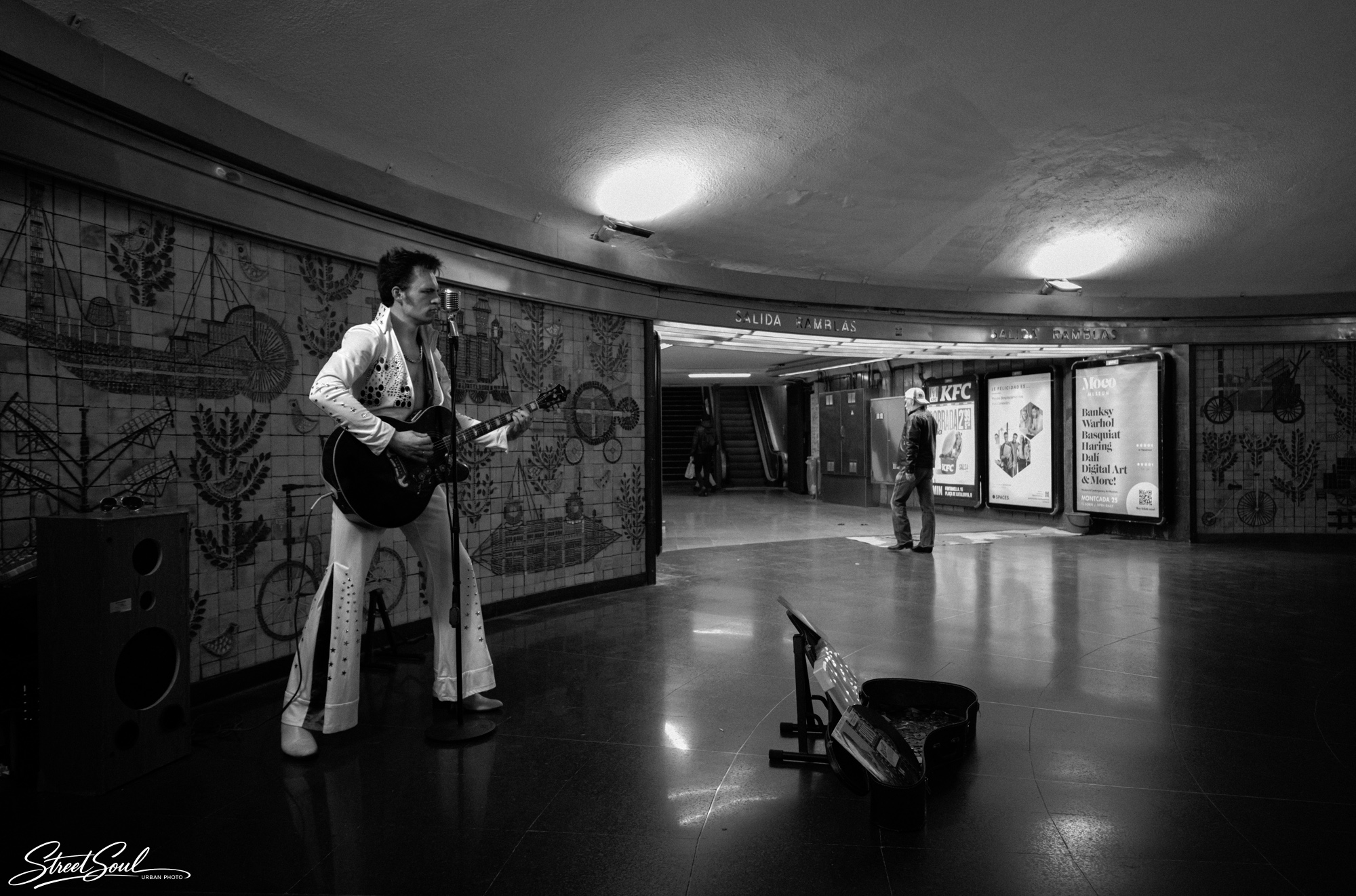
There are scenes that ask for admiration, and others that ask for suspicion. This one asked for both. A street performer had turned himself into a monument to bad decisions and raw balance, hanging over a dirt bike as if gravity had briefly resigned from public service. To the right, a passerby looked back with that expression people wear when reality becomes slightly impolite.
What interested me was not the trick alone. Tricks are cheap; cities are full of them. What mattered was the small crack in the theatre. The rider is all strain, weight and silence, while the boy walking past gives the frame its real measure. One body is pretending to be sculpture. The other is simply trying to get on with the day. That friction is the photograph. The city, as usual, refuses to collaborate neatly.
I shot it with the Ricoh GR IV Monochrome because this kind of image does not need cosmetic charm. It needs nerve. The harsh whites, the swallowed blacks, the rough pavement and the wall with all the tenderness of a bureaucratic slap were doing enough already. I only had to keep the frame wide, let the emptiness breathe, and wait for the glance. Without that glance, it is a street act. With it, it becomes a small civic absurdity.
My decision was simple: keep the performer dominant, but leave enough dead space for the second figure to sting the image awake. Provoke was never about cleanliness. It was about tension, abrasion, and the feeling that the world is always half a second away from becoming rude.
Ricoh GR IV Monochrome recipe: my “poor manners” Provoke preset
Use this as a starting point, not a religion. Religions are already doing enough damage.
Image control: High contrast. Contrast: +3 or +4. Highlight contrast: +1. Shadow contrast: +4. Sharpness / clarity: +1 at most, never too polished. Grain: strong. Noise reduction: low or better off. Let the file breathe badly. Exposure compensation: -0.7 EV as a default base in daylight. ISO: Auto, with a ceiling around 6400. Metering: highlight-weighted or whatever keeps whites from dying completely. Focus: snap focus, around to 2 m. Focal length: native wide view; don’t overthink it. The camera is not your therapist. Framing rule: leave uncomfortable negative space and let one element disturb the main subject. Editing rule: no editing.
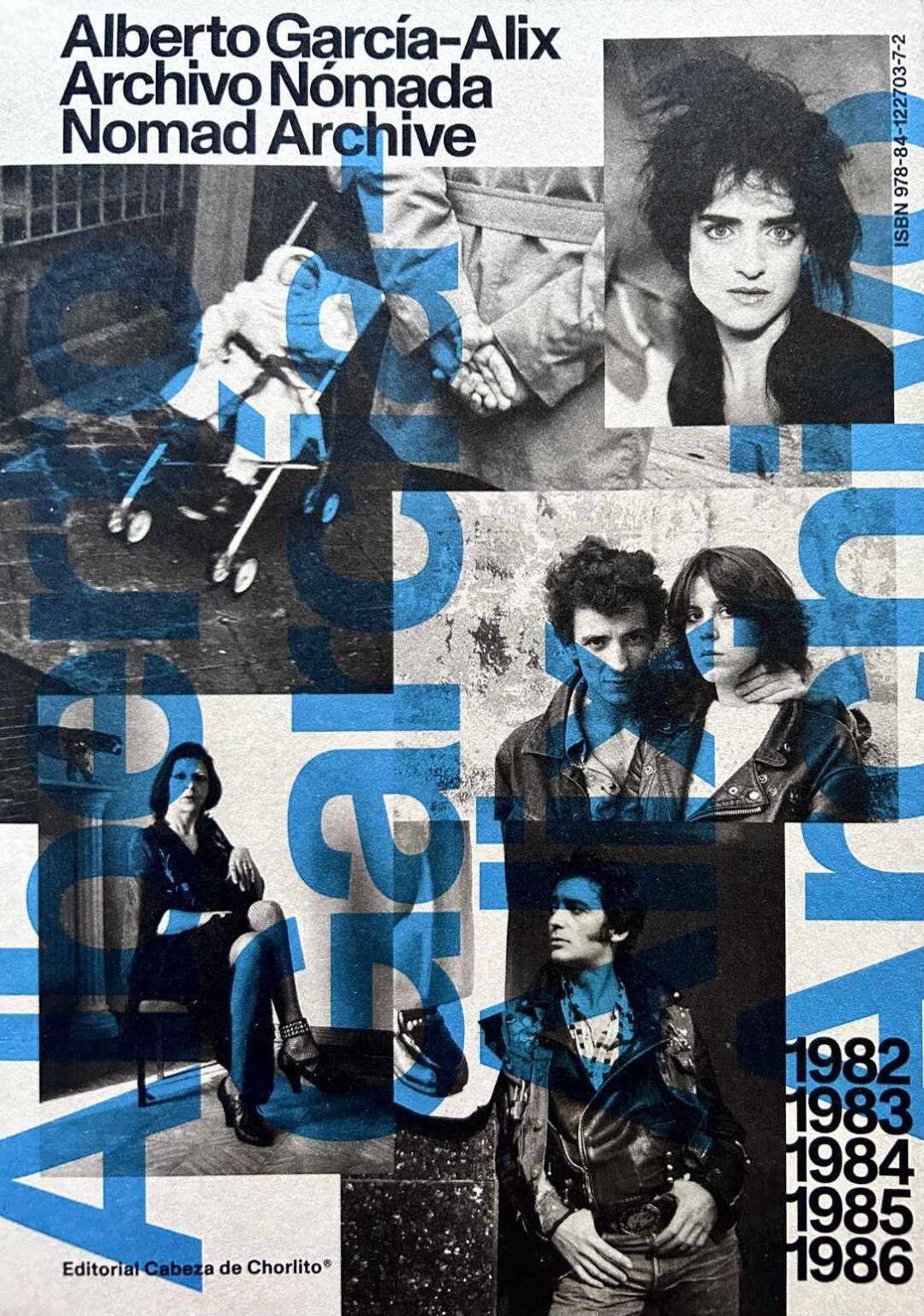
I liked Archivo Nómada 82–86 for a reason that is not particularly refined. It is alive. That may sound like one of those phrases people use when they do not want to say anything precise, but here it is exact. There are books of photographs that are correct, serious, well produced, and dead as a municipal speech. This one is not. This one moves. It breathes badly, sometimes. It looks at you with the eyes of someone who has slept little and seen too much. That already sets it apart from a great many respectable photobooks, which are usually very well behaved and therefore tedious.
Alberto García-Alix does not photograph as if he were applying for permission. He photographs as if life were happening in front of him and he had better not blink. The result is not a collection of “important images,” which is what lesser photographers and worse editors are always trying to manufacture. It is something harder to fake: a body of work with pulse. Not prestige. Pulse.
What I admire most is that these photographs do not seem to have been made to explain anything. They are not there to illustrate an era like those books people put together once history has done the vulgar part and turned pain into cultural heritage. No. These pictures still have bad manners. They come from proximity, from loyalty to what was lived, from that dangerous point where affection and lucidity manage, against all odds, to occupy the same frame.
And that changes everything. Because when a photographer is really inside what he photographs, the image loses that thin layer of vanity that ruins so much contemporary work. There is no touristic misery here, no decorative darkness, no rebellion packaged for people who enjoy saying “raw” in a gallery with clean toilets and decent lighting. García-Alix does not aestheticise life from the outside. He is in it up to the neck. One can tell. It gives the pictures a weight that style alone never gives.
There is youth in these pages, of course, but not the kind institutions like to remember. Not youth as slogan, perfume or alibi. This is youth with its defects intact: bravado, desire, fatigue, vanity, tenderness, recklessness, beauty without hygiene. Faces that still seem to be deciding whether to laugh, disappear or get into trouble. Rooms that look as though they have heard too much. Bodies that are not symbols of anything especially noble, which is fortunate, because symbols are usually where truth goes to die.
The remarkable thing is that the book never collapses into disorder. It could have. The material is excessive, emotional, unstable. Yet the sequence holds. García-Alix has that rare instinct for rhythm that cannot be taught by critics, curators or other people who make a living from explaining what they would never know how to do. He knows when an image has to hit you straight on and when it should remain at the side, watching, like someone smoking in silence while the room finishes saying what it has to say.
That is why the book stays with you. Not because it wants to impress you, but because it refuses to flatter you. It does not ask to be admired for being brave, or historical, or legendary. It simply places a world in front of you and lets the world keep its rough edges. Which is rarer than it should be. Most people, once they get near an archive, start embalming things. García-Alix does the opposite. He opens the drawer and lets the animal breathe.
I finished the book with a feeling I distrust and value equally: gratitude. Gratitude, first, because the photographs are so free of fraud. And gratitude, too, because books like this remind one of an awkward truth: photography matters when it stops trying to be culture and goes back to being necessity. When it ceases to decorate and begins to witness. When it is not worried about looking intelligent because it is too busy looking hard.
There is also, I admit, a small element of humiliation in the pleasure. A book like this leaves many contemporary images looking what they are: tidy, timid things, beautifully packaged and spiritually underfed. Very presentable. Very empty. García-Alix is not empty. He may be excessive, stubborn, nocturnal, sentimental when it hurts and cruel when needed. Better that. Much better. At least one is in the company of a human being.
And that, in the end, is what I loved. Not the myth, not the period, not the cultural varnish that other people will be eager to apply to it. I loved the lack of permission in it. The lack of deodorant. The feeling that someone had gone through life with the camera close to the chest and the eyes open, which is still more difficult than many would like to admit.
If this book tempts you, you can get it here, with free shipping and a 5% discount.
I have a talent for waiting without looking like I’m waiting. Which, in street photography, is less a charming personality trait and more a survival mechanism. Anyone can walk quickly, press a shutter, and pretend instinct did the work. Patience is another matter. Patience means standing in a place that seems visually unremarkable, trusting that light, gesture, shadow, or sheer human absurdity will eventually do something worth your time. Most people get bored. I get interested. The street always cracks open in the end, usually just after it has convinced everyone else there is nothing to see.
This ability is not glamorous. It does not sound impressive at dinner, and it certainly does not help with bureaucratic forms, delayed trains, or websites that insist on “optimizing the user experience” by hiding the one button you actually need. But in photography, and probably in life, it matters. Waiting teaches you to stop forcing reality into your own timetable. It reminds you that the world does not perform on command, which is inconvenient, obviously, if you enjoy control or delusions. I enjoy both, so the lesson is useful.
The skill I sometimes wish I had is the opposite: the ability to enter any social situation with immediate ease, to talk to anyone, anywhere, without that small inner negotiation beforehand. Not because I want to become one of those people who treats every stranger like an unpaid audience, but because there is a kind of freedom in effortless human contact. Street photography lives between distance and connection. You observe, but you also participate. You disappear, but not entirely. To move through that border with total naturalness would be a gift. Until then, I’ll keep relying on the older craft: watching carefully, waiting longer than is reasonable, and trusting that the world, sooner or later, will betray itself beautifully.
If I had to choose properly, I’d go for that kind of weather that looks mildly disappointed in humanity: cool air, a sky covered in clouds, maybe a thin drizzle that never quite commits to becoming real rain. Not a storm, not misery, just that quiet grey atmosphere that makes everything slow down a little and stop pretending to be more glamorous than it is.
I like it because it changes how a place feels. In bright sun, everything is obvious. The light shouts, the contrasts are crude, and the world starts performing for itself like an overconfident extra in a bad commercial. In overcast weather, things get subtler. Textures come forward, reflections matter more, people seem more inward, and ordinary streets suddenly have a bit of mystery. It’s a better climate for paying attention.
There’s also something mentally pleasant about it. Cool, muted weather invites thought. It makes walking feel purposeful, reading feel natural, and conversation feel less theatrical. You don’t have to fight the heat, the glare, or that exhausting pressure to “make the most of the day” just because the sun has decided to behave like a motivational speaker. A grey day asks less of you, and that is one of its great virtues.
And yes, a bit of drizzle helps. Not enough to ruin things, just enough to sharpen the air and give surfaces a slight sheen. Pavements darken, windows catch more nuance, and the whole world gets a little more cinematic without becoming ridiculous about it.
The Leica M10 Monochrom is still my natural territory. It asks for patience, precision, and that stubborn little pause before pressing the shutter, as if the world owed me one more second of clarity. But now there is a second camera in my daily life: the Ricoh GR IV Monochrome. Small, fast, almost insolently practical. The kind of camera that does not ask for ceremony. It asks whether you are awake.
One of the things I like most about the Ricoh is that it can hold three custom programs. My U3 is where I let the polite version of myself step aside. It is a recipe built to photograph in a completely different way: raw, impulsive, direct to JPG, with no interest in behaving nicely. It is my Provoke mode. Less control, more instinct. Less refinement, more friction. A way of working that accepts blur, harsh contrast, broken texture, visual violence. In other words, reality when it stops pretending to be elegant.
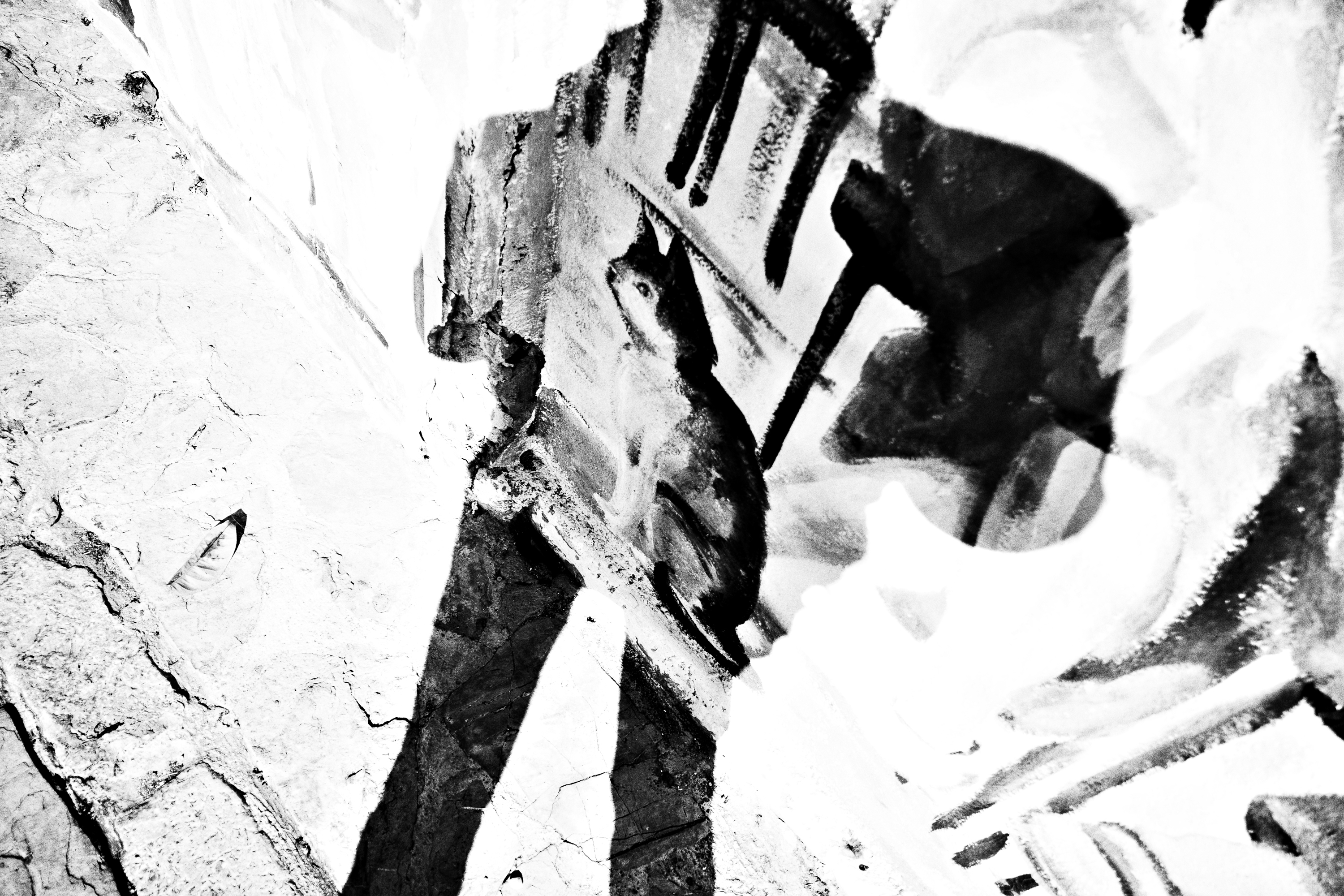
This photograph is one of the first pieces I made with that approach. I was not trying to describe a wall. I was trying to collide with it. Light, shadow, rough surface, graffiti, fragments that almost refuse to become legible. The image does not explain itself, which is refreshing in a world where everything seems desperate to be understood in three seconds. It is not tidy, not balanced, not obedient. Good. Street photography does not need more obedience.
So which of these two styles is more mine? The careful, deliberate monochrome of the Leica, or the harsher, immediate language of the Ricoh in U3? The answer is inconveniently simple: both. They do not compete. They complement each other. One helps me distill the world. The other helps me attack it. Between the two, I get closer to photographing reality as I actually see it, not as photography manuals think I should. This new line of work also fits the broader StreetSoul push to make the monochrome voice clearer and more visible online.
I now carry a Ricoh GR IV Monochrome with me. Always. Not as a replacement for the Leica M10 Monochrom, because that would be the kind of silly internet melodrama people seem to enjoy when they have nothing better to do. The Leica is still my main camera, still the one that feels like an extension of intent, weight, and commitment. The Ricoh plays a different role. It is the camera that slips into the cracks of the day. The one that stays with me when everything else is too much, too large, too deliberate, too noble for the simple act of being out in the street and paying attention.
That is the point. Not portability as a lifestyle cliche, but availability as a way of seeing. The best camera is not the one that wins forum arguments. It is the one that is there when the street decides to stop pretending. This little monochrome compact lets me work closer to impulse, closer to fracture, closer to the raw visual interruptions that usually disappear while you are still thinking about focal lengths, bags, or photographic dignity. With it, I have started to experiment with different ways of looking at what surrounds me: harsher crops, unstable angles, dirtier gestures, less reverence, more collision. Things are still taking shape, and thankfully so. Anything too finished too early is usually dead on arrival.
That is why I have opened a new section on the website called Provoke. The name is a deliberate homage to the Japanese photographic movement that understood something many people still miss: photography does not need to be clean to be honest, and it certainly does not need to be polite to be alive. Grain, blur, abrasion, fragmentation, visual tension, disobedient framing… none of that is a flaw when it serves the emotional truth of the image. Sometimes the street is not offering you grace. Sometimes it offers pressure, noise, scars, and brief alignments of concrete, steel, shadow, and light. Pretending otherwise produces nice pictures, perhaps. I am after something a bit less obedient.
The images I am starting to place in Provoke are direct JPEG from the camera. No Lightroom. No post-processing. No digital makeup session afterwards to reassure the nervous. What you see is what the camera gave me in the instant, and that matters. I want to trust the camera’s response, but also my own reflex at the moment of contact. These frames are not trying to be precious. They are fragments, scratches, abrupt visual notes taken while moving through the city. A chalk line that becomes an attack on the frame. A sink that turns into an apparition. A pavement edge, a traffic mark, a pole, a slab of darkness cut by white. Ordinary things, obviously. Which is exactly why they matter. Street photography does not need spectacle. It needs tension. It needs form under pressure. It needs the city to reveal itself without costume.
So yes, the Leica M10 Monochrom remains the camera of depth, intention, and long-form commitment. But the Ricoh GR IV Monochrome has already earned its place beside it as the camera of instinct, interruption, and permanent readiness. Provoke is where that side of my work will live: rougher, quicker, more fragmentary, more experimental, and probably more honest because of it.
If I’m going cross-country, I’m picking the car. Not because it’s romantic, let’s not lie to ourselves, but because it’s the only option that lets you stop when something actually interesting happens. Airplanes are efficient, sure, if your life goal is to teleport from one overpriced coffee to another. Trains pretend to be poetic until you realize you’re just staring at the same blur for hours. A car, though, gives you friction, detours, bad decisions, and the occasional moment that feels like a photograph waiting to exist.
There’s also something deeply suspicious about trips where everything is scheduled. You board, you sit, you arrive. Congratulations, you’ve successfully behaved like luggage. Driving forces you to negotiate with reality: weather, roads, wrong turns, questionable motels. It’s inconvenient in the best possible way. The kind of inconvenience that produces stories instead of Instagram captions that read like they were generated by someone who’s never been outside.
And yes, a bike would be more “authentic,” if by authentic you mean physically broken by day three and questioning your life choices somewhere between two identical fields. A bus? That’s just surrender with wheels. So I’ll take the car: imperfect, inefficient, and full of potential for things to go slightly wrong, which is exactly where anything worth remembering tends to happen.