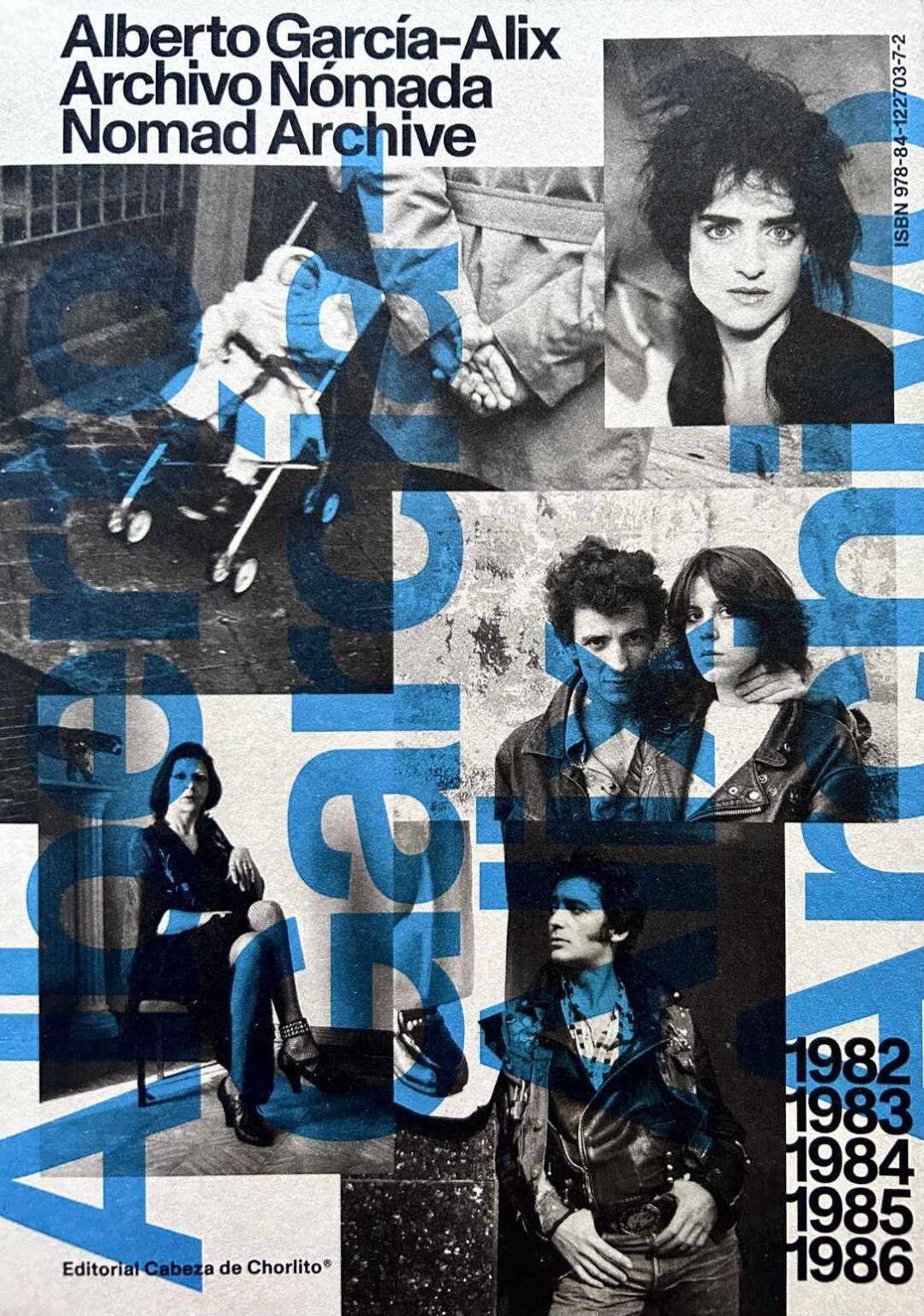
I liked Archivo Nómada 82–86 for a reason that is not particularly refined. It is alive. That may sound like one of those phrases people use when they do not want to say anything precise, but here it is exact. There are books of photographs that are correct, serious, well produced, and dead as a municipal speech. This one is not. This one moves. It breathes badly, sometimes. It looks at you with the eyes of someone who has slept little and seen too much. That already sets it apart from a great many respectable photobooks, which are usually very well behaved and therefore tedious.
Alberto García-Alix does not photograph as if he were applying for permission. He photographs as if life were happening in front of him and he had better not blink. The result is not a collection of “important images,” which is what lesser photographers and worse editors are always trying to manufacture. It is something harder to fake: a body of work with pulse. Not prestige. Pulse.
What I admire most is that these photographs do not seem to have been made to explain anything. They are not there to illustrate an era like those books people put together once history has done the vulgar part and turned pain into cultural heritage. No. These pictures still have bad manners. They come from proximity, from loyalty to what was lived, from that dangerous point where affection and lucidity manage, against all odds, to occupy the same frame.
And that changes everything. Because when a photographer is really inside what he photographs, the image loses that thin layer of vanity that ruins so much contemporary work. There is no touristic misery here, no decorative darkness, no rebellion packaged for people who enjoy saying “raw” in a gallery with clean toilets and decent lighting. García-Alix does not aestheticise life from the outside. He is in it up to the neck. One can tell. It gives the pictures a weight that style alone never gives.
There is youth in these pages, of course, but not the kind institutions like to remember. Not youth as slogan, perfume or alibi. This is youth with its defects intact: bravado, desire, fatigue, vanity, tenderness, recklessness, beauty without hygiene. Faces that still seem to be deciding whether to laugh, disappear or get into trouble. Rooms that look as though they have heard too much. Bodies that are not symbols of anything especially noble, which is fortunate, because symbols are usually where truth goes to die.

The remarkable thing is that the book never collapses into disorder. It could have. The material is excessive, emotional, unstable. Yet the sequence holds. García-Alix has that rare instinct for rhythm that cannot be taught by critics, curators or other people who make a living from explaining what they would never know how to do. He knows when an image has to hit you straight on and when it should remain at the side, watching, like someone smoking in silence while the room finishes saying what it has to say.
That is why the book stays with you. Not because it wants to impress you, but because it refuses to flatter you. It does not ask to be admired for being brave, or historical, or legendary. It simply places a world in front of you and lets the world keep its rough edges. Which is rarer than it should be. Most people, once they get near an archive, start embalming things. García-Alix does the opposite. He opens the drawer and lets the animal breathe.
I finished the book with a feeling I distrust and value equally: gratitude. Gratitude, first, because the photographs are so free of fraud. And gratitude, too, because books like this remind one of an awkward truth: photography matters when it stops trying to be culture and goes back to being necessity. When it ceases to decorate and begins to witness. When it is not worried about looking intelligent because it is too busy looking hard.

There is also, I admit, a small element of humiliation in the pleasure. A book like this leaves many contemporary images looking what they are: tidy, timid things, beautifully packaged and spiritually underfed. Very presentable. Very empty. García-Alix is not empty. He may be excessive, stubborn, nocturnal, sentimental when it hurts and cruel when needed. Better that. Much better. At least one is in the company of a human being.
And that, in the end, is what I loved. Not the myth, not the period, not the cultural varnish that other people will be eager to apply to it. I loved the lack of permission in it. The lack of deodorant. The feeling that someone had gone through life with the camera close to the chest and the eyes open, which is still more difficult than many would like to admit.
If this book tempts you, you can get it here, with free shipping and a 5% discount.
Leave a Reply