Author: Jaume Salvà
-

Ritual Pressure
Sant Joan does not need more spectacle. It already has enough.
What interested me was the pressure around it: bodies packed into narrow streets, hands looking for balance, the animal becoming public weather, the crowd pretending it can control what it has summoned.
The horse is not always the subject. Sometimes the subject is the space it removes from everyone else. The bent neck, the raised legs, the hands against the wall, the phone too close, the face half-hidden by heat and noise. The ritual holds because it nearly stops holding. That edge is where these photographs sit.
Ciutadella gives the event a beautiful frame. These photographs do not obey that frame for long. They stay closer to the crush, the sweat, the uniform, the balcony, the interior rooms before the street swallows everything again.
Black and white strips away the festive explanation and leaves weight: skin, stone, cloth, shadow, animal muscle, public fatigue.
This is not a guide to Sant Joan.
It is a first edit from inside the pressure.
Technical note: Sant Joan de Ciutadella, 2026. Black and white street photography. Leica M10 Monochrom / Ricoh GR IV Monochrome · Lightroom Classic.


-
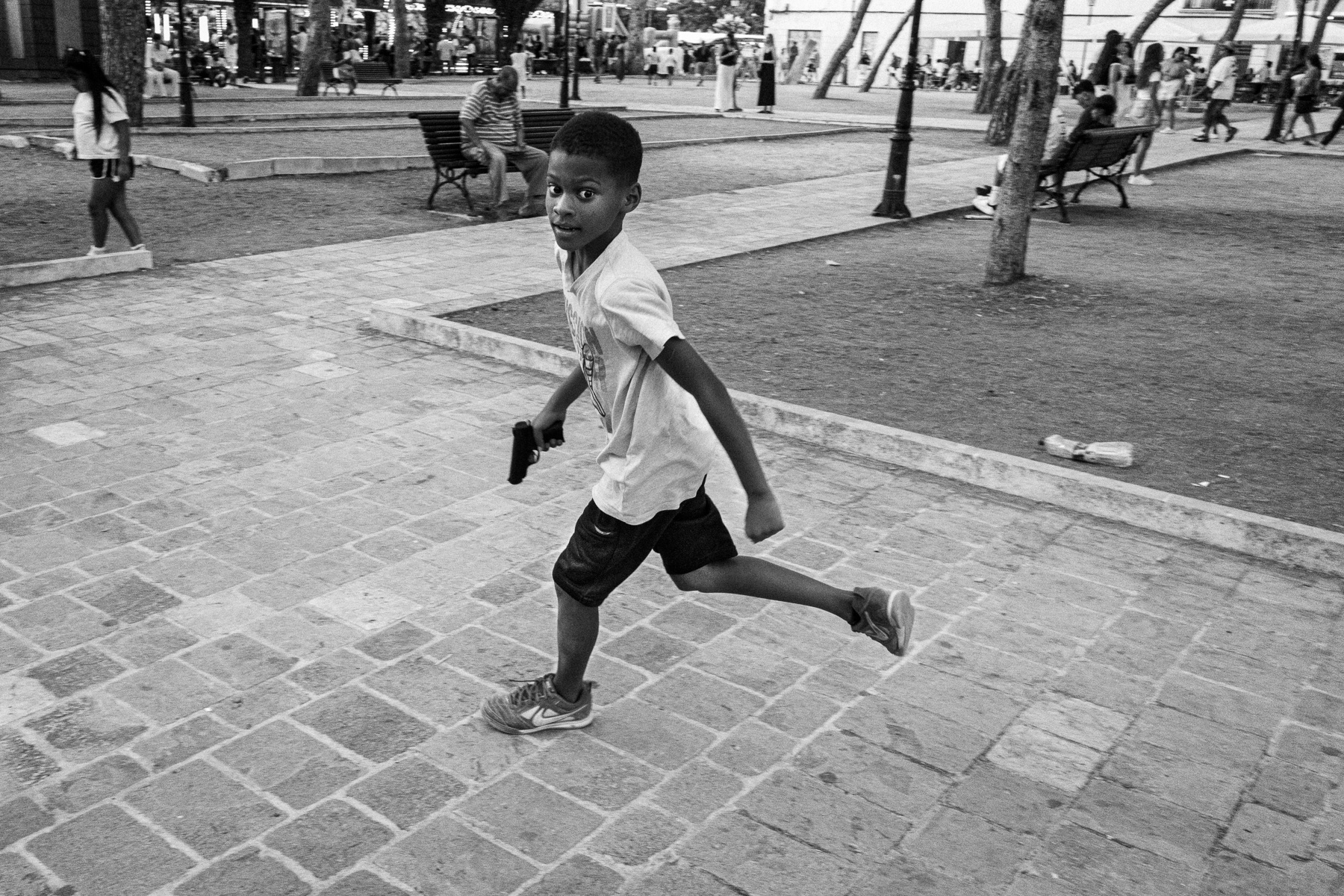
Three Shots, Not One More

Original shot by StreetSoul with my loved Ricoh GR IV Monochrome and Lightroom Classic. Review of Disparos contados, by Leila Méndez
The finger arrives too soon.
That is the problem, or at least one of the problems. Digital photography did not invent haste, but it gave it batteries, a screen, cheap memory, and a very convenient technical excuse. Shoot now. Think later. The phrase sounds practical until one day you open the archive and find hundreds of correct, polite, sharp, perfectly dead images. A cemetery can also be well focused.

Disparos contados, by Leila Méndez, enters through this crack. Not through the solemn door of analogue nostalgia, with its smell of darkroom, leather straps, and people talking about “process” as if they had discovered wet fire. The book looks at something smaller and more useful: restraint. The pause before the click. The discomfort of knowing that not everything deserves to be photographed just because it can be photographed.
Its strongest idea is not to defend film against the sensor. That war has already produced enough dull conversations on terraces, forums, and dinners where someone always ends up saying “texture” with worrying gravity. Méndez points toward an attitude. Photograph with fewer automatisms. Accept a little friction. Let the image take longer to arrive, even if that delay looks bad in any productivity metric.
In the excerpt published by Anagrama, there is a perfect scene for understanding the book: a concert photographer who loaded his roll of film at the beginning, spent most of the concert watching, and only took three photographs at the end, at the moment of highest intensity. Three. Not one more. The restriction did not make him better by magic, but it forced him to wait for something. And waiting, in photography, is already almost a form of thought.
This is where the book gains weight. Analogue photography does not appear as a superior purity. Méndez herself warns that the chemical format does not improve or elevate any artistic discourse by itself. Good news: film does not redeem mediocrity either. An empty photograph remains empty, even if it has grain and cost twelve euros to develop. Grain can hide many things, but it does not perform miracles. No point asking it to do saintly work.
What analogue does offer, when it does not turn into theatre, is a useful kind of poverty. Few exposures. Cost. Delay. Uncertainty. A chain of small irritations that force you to decide before producing. Digital, by contrast, has trained us to produce before deciding. We will choose later. We will edit later. We will see later. That “later” piles up on hard drives full of images that do not ask to be looked at, only archived with a moderate sense of guilt.
For StreetSoul, the book touches a familiar nerve. Street photography has always lived too close to hunting. A body crosses a shadow, a hand slips out of a shop window, a face is cut by a reflection, the traffic light stages a little involuntary theatre. The finger wants to shoot. The street does not wait. But haste is not always instinct. Often it is only the fear of going home without prey.
Méndez is not asking us to go backwards. That saves the book from a very easy fall. In photography, the past usually has too many defenders with display cabinets. The interesting question is not whether we should return to film, but what we can learn from that imposed slowness. What happens if a digital camera is used with a less greedy discipline. What changes if the photographer accepts not shooting. Not out of Zen posturing, that other plague with good natural light, but out of respect for the image.
Immediacy has turned many photographers into administrators of their own noise. Go out, shoot, import, select, edit, export, publish, tag, measure, repeat. A flawless chain. Also a slightly idiotic one. Photography ends up working shifts to feed platforms that confuse presence with meaning. The world was already saturated enough before every shadow had to book an appointment with Instagram.
Disparos contados matters when it defends a simple idea without turning it into doctrine: limits can sharpen the eye. They guarantee nothing. They do not make anyone a better photographer. They only remove excuses. With fewer shots, each shot weighs more. With less abundance, the decision stands more exposed. And when the decision is poor, it can no longer hide behind a burst.
The book should also be read against another superstition: the belief that an analogue attitude carries some kind of moral nobility. It does not. It can mean judgement, patience, waiting. It can also mean vanity with developing receipts. The format is not what makes the difference. The eye does. A digital Leica can be as lazy as a plastic compact. A roll of film can contain thirty-six expensive mistakes. Chemistry does not think for anyone.
The book’s value sits in this uncomfortable zone: it does not sell a solution, it points to a vice. We shoot too much because we can. We look too little because looking does not immediately produce anything. Photography, when it still keeps a little dignity, begins just before the click. In that small second when the finger shuts up and the mind, if it gets there in time, decides.
The problem is not coming home with few photographs. The problem is coming home with a thousand and discovering that none of them had been waited for.
You can buy this book here with 5% discount and free shipping.
-
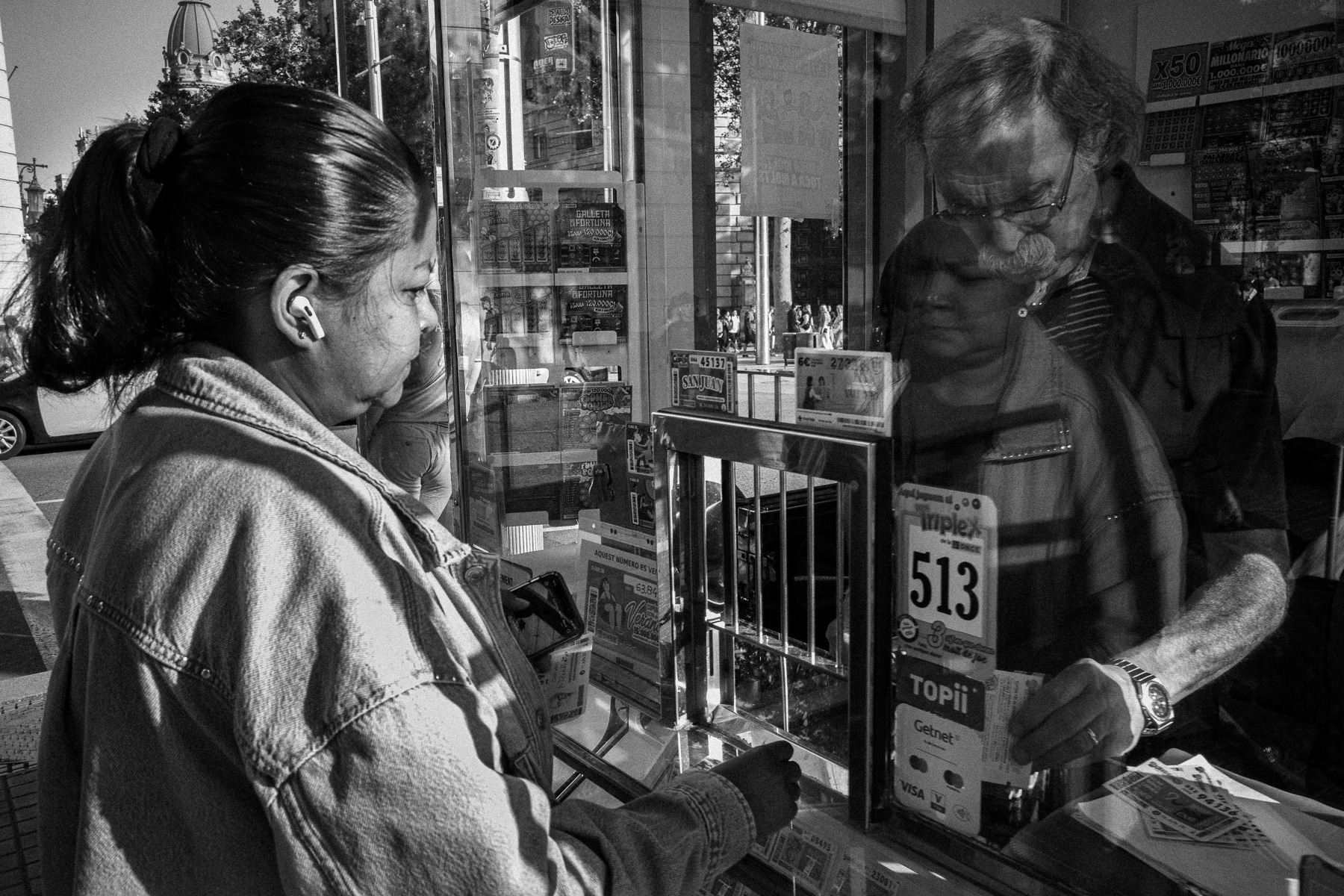
The City Has a Counter — sequence
I keep coming back to the same small bargain: shopfront glass, numbers, a public fountain, a counter telling the hand where to stop.
Barcelona is not scenery in these pictures. It gets in the way. It puts something between people and whatever they need: a pane of glass, a strip of metal, a place to wait, a rule nobody has bothered to write down.
People adjust.
They wait. Lean in. Pay. Drink. Move on.The street gives a little. Then it asks for something back.


-
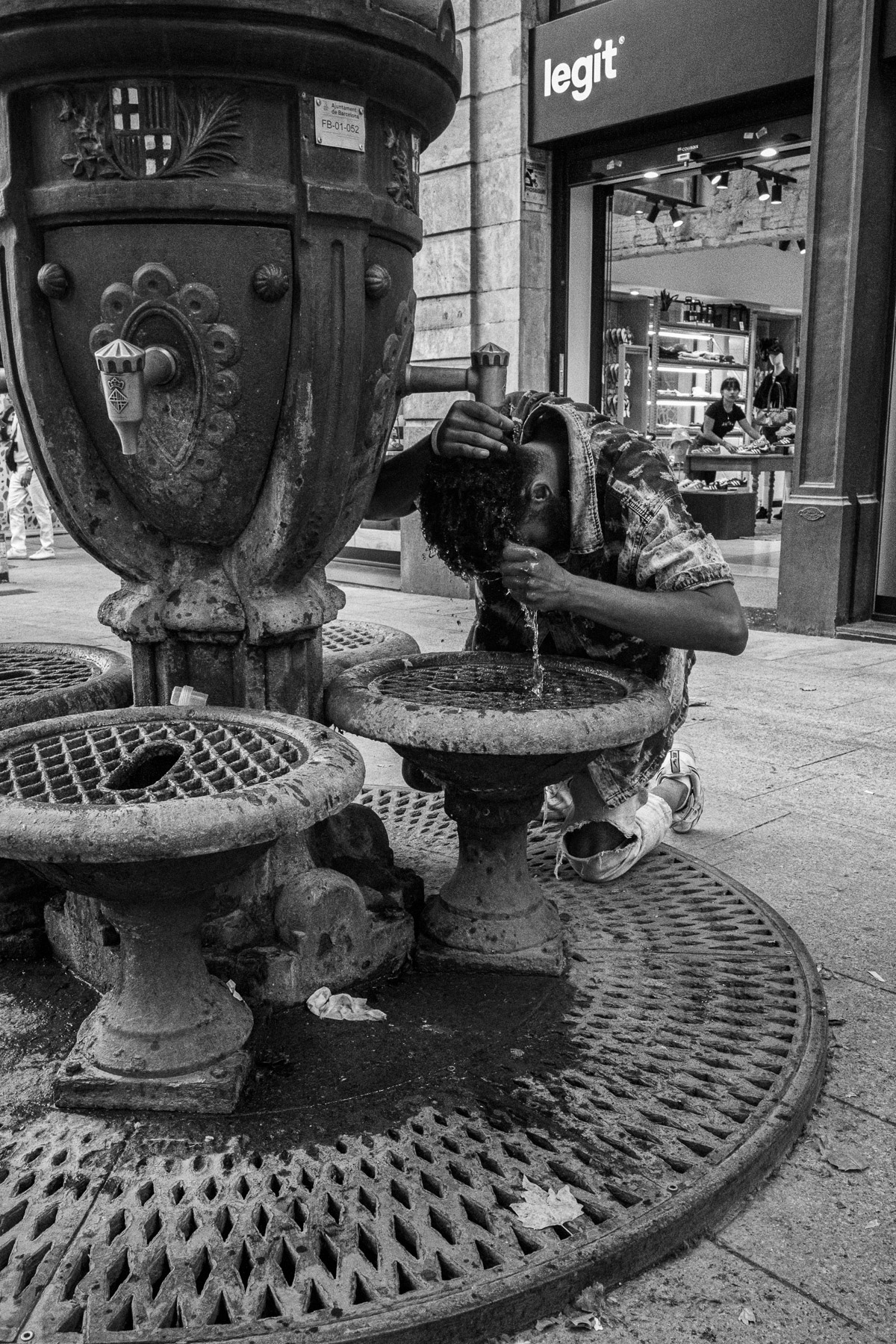
Legit
The city provides, but never cleanly.
A man drinks from a public fountain.
The sign says legit.
The metal looks tired.
The gesture does not.Barcelona is not a backdrop here. It is a system of small permissions: drink here, wait there, lean on this, keep moving.
The body accepts the deal because sometimes that is all the street offers.
Technical: Ricoh GR IV Monochrome · Lightroom Classic.
-
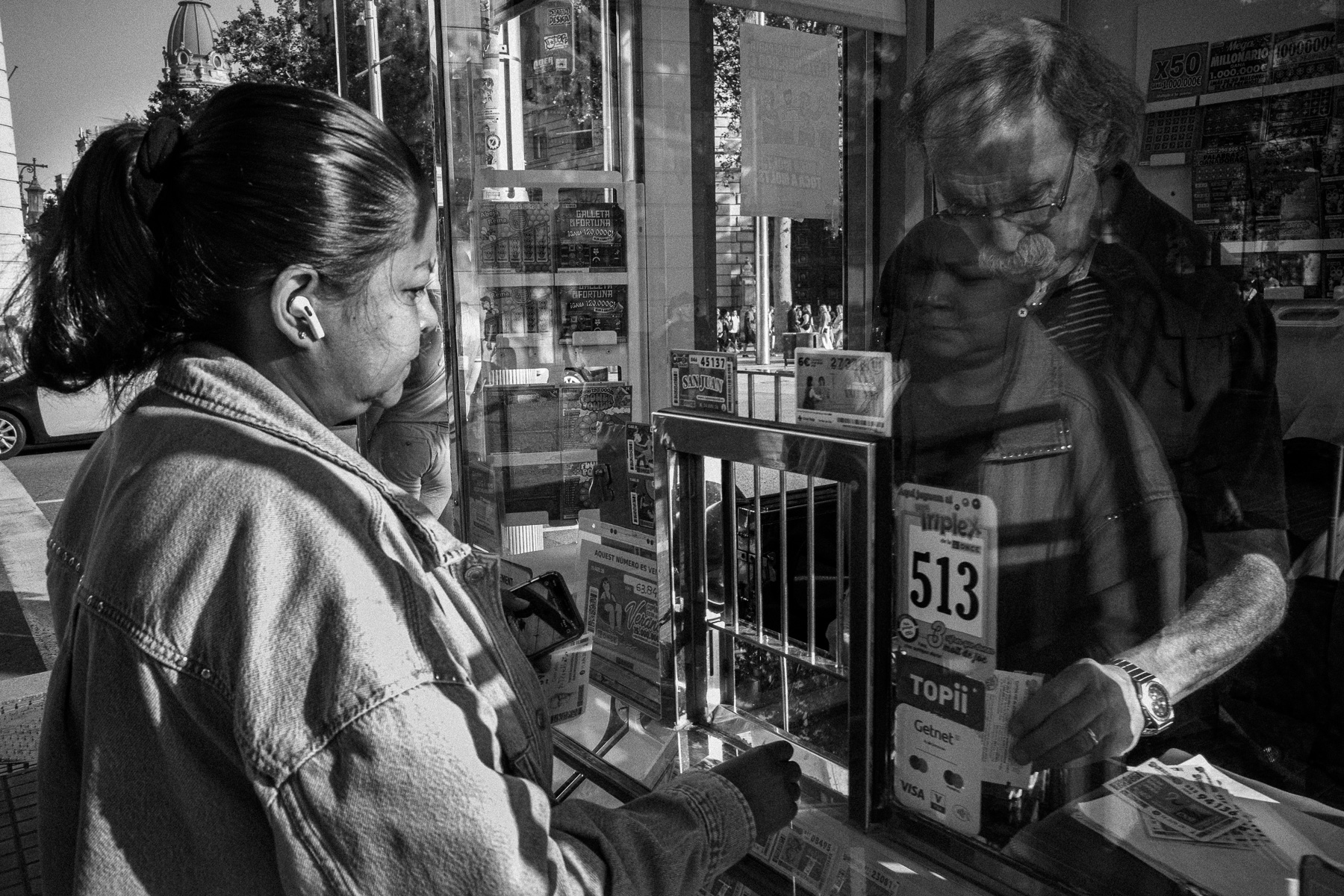
The City Has a Counter
Barcelona is all small exchanges here: lottery windows, shopfront glass, numbers, hands, waiting.
The street is not open space. It has rules.
A counter decides where the body stops.
Glass keeps the gesture visible but out of reach.A hand comes forward.
A number sits behind the window.
Someone waits outside and still has to play along.This is not the postcard version of the city.
It is the city as a set of limits: pay here, wait there, come closer, not that close. -
Clock Sale

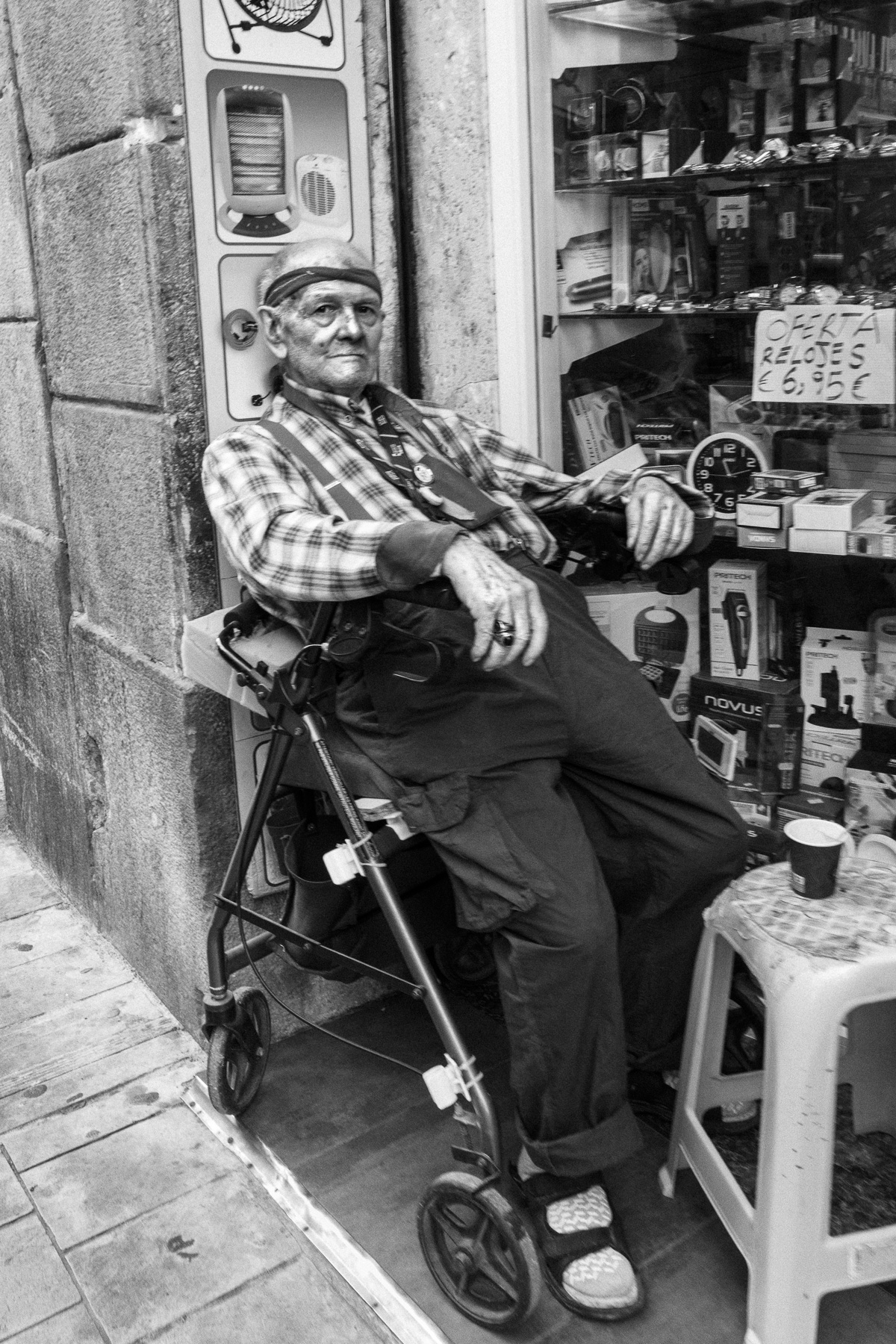
This week began with faces, bodies and doorways. Not portraits in the polite sense. Nobody was arranged, softened, rescued or turned into a small monument of dignity for the comfort of the viewer. The camera stayed close to the edge of the street: entrances, shopfronts, walls, bad light, tired hands, cigarettes, walkers, plastic stools, small signs, objects waiting longer than people.
The fifth portrait sits at the end of that line.
An older man rests outside a small shop. A walker stands in front of him, almost more frontal than the body itself. Behind him, the window is full of clocks and small objects, the kind of things that belong to shops where time seems to have stopped out of habit, not nostalgia. A handwritten sign announces watches on sale.
Time is cheap in the window. Waiting is not.
That small joke is what keeps the photograph from becoming too solemn. The frame has enough weight already: the seated body, the walker, the shop entrance, the crowded glass, the stool, the cup, the little domestic debris of the pavement. Everything is slightly too much, and that is why it works. The city does not give the man a clean background. It gives him inventory.
The five portraits from this week have been circling the same problem: how a body occupies a narrow piece of public space when there is no proper place to be. A doorway becomes a chair. A wall becomes support. A shopfront becomes weather. The street does not stage these things. It just leaves them there, badly lit and perfectly clear.


Next week, the frame opens wider.
The portraits will give way to a Barcelona street series: less face, more city; less individual tension, more pavement, shutters, glass, crossings, corners and people reduced to the size the city allows them. Not Barcelona as postcard. Not Barcelona as Mediterranean mood with clean typography and rental prices from another moral universe.
Barcelona as pressure.
This photograph stays between both weeks. It belongs to the portraits, but it already points beyond them. The man is there, unmistakably, but the shop window is also there, doing its quiet damage. The clocks, the walker, the sign, the pavement. A whole city compressed into a bad little arrangement nobody designed and nobody will fix.
The street keeps excellent records.
It just refuses to file them properly.
Preview of the next week. -
Same Light, Different Directions
Hard Light

The sun is not fair here, and it does not try to be.
A man stays a few steps behind, dressed in white, cut open by hard light. His mouth is half open, his hand is caught in the middle of a gesture, and his eyes are already somewhere outside the frame. In front of him, a woman crosses the foreground with her cap low and a smile almost buried inside the shadow. She is larger in the photograph, but she does not explain it. He is smaller, but louder.
The street adds the rest: open asphalt, white lines, façades, traffic lights, bicycles, a motorcycle in the distance, and that exact amount of city that always feels slightly excessive. There is no clean stage here. There is urban pressure. The background does not support the figures; it pushes against them. The city pretends to be a neutral surface, because cities enjoy that little fraud. It is not neutral. The asphalt carries weight, the crosswalk cuts the frame, the façades stand there with the old confidence of things that never apologize.
In the first version, the whites on the man’s clothes were too loud. The tank top and shorts could have dragged the photograph into that miserable territory where everything starts to look like a detergent commercial that took a wrong turn. The highlight warnings were useful, but not as commandments. They only showed where the image was beginning to lose flesh.
The edit moved in the opposite direction: control the whites without killing them, keep the shadow under the cap without opening it too much, give a little more weight to the man’s gesture, and let the background remain a city without letting it take over the room. The shadow on her face is not a heroic rescue mission. It belongs there. Some shadows have earned the right to stay closed.
The final crop pulls the frame closer to the two bodies. It removes loose air, cuts down the postcard architecture, and leaves the scene in a more physical place. The point is not to make the photograph cleaner. The point is to make it readable without disinfecting it, a very human habit and, frankly, a suspicious one.
This image belongs to Hard Light because the light is not just a technical condition. It is the force arranging the frame. It also brushes against Urban Wildlife: two bodies crossing the city like half-civilized urban animals, each with a direction, a temperature, and a small private defence.
The street does not give them a story. It gives them too much light, a strip of asphalt, and two directions that do not quite agree.
Technical: Ricoh GR IV Monochrome · Lightroom Classic.


-
![[Review] Fotografías de guerra (1974-1985): Dust, Iron, and White Light](https://streetsoul.me/wp-content/uploads/2026/06/04.png)
[Review] Fotografías de guerra (1974-1985): Dust, Iron, and White Light

Fotografías de guerra (1974-1985) arrives with dust, iron, and a white light that hurts the eyes. The book demands a steady stomach, a still gaze, and very little faith in grand words.
On the cover, an armed man aims at an empty horizon. His body carries the tension: the bent back, the long rifle, the pale clothes, the desert ahead. War is reduced to a posture. A way of crouching. A way of waiting for something worse to happen.
The selected photographs have a dryness that works in their favour. There is grain, dust, walls scorched by the sun, sweaty clothes, weapons that weigh too much, and bodies settled into an almost physical discomfort. War, seen like this, sheds rhetoric and gathers dirt. It also gathers weight. The exact weight of a weapon, of a pocked wall, of a man crouched for too long under a light that flattens everything.

One of the hardest images is that of the fighter running with the rifle across his back. The body is caught mid-thrust, low, almost animal. The violence comes from the movement, from the dust, from that slightly ridiculous urgency of running with death slung over your back. War puts men into absurd postures and then asks them to call it heroism. Humanity, once organised, produces admirable documents and massacres with logistics.

In another scene, three figures occupy a terrace or a half-ruined space. On the left, a man aims. In the centre, another throws something against a white wall covered in marks. On the right, a young woman waits with her rifle horizontal, crouched, too still for what is happening around her. The floor is filthy: rubble, puddles, scattered fragments. The wall ends up ruling the image. White, dry, punctured. A punished surface that seems more alive than the people hiding beside it.

The photograph of the silhouette inside the dark opening holds in another way. The face is eaten by shadow. Only the outline of the hair, the rifle, and the city in the background remain visible. It is a quiet, persistent image. War appears there as a way of inhabiting the edge: looking from a hole, waiting from a dirty place, turning a window into a trench. Outside there are still buildings. Perhaps ordinary windows. Perhaps someone boiling coffee. History has always had this lack of manners: some shoot while others try to get on with the day.

There are also portraits in which the fighter seems dressed up as himself. A man with a turban and large goggles sits in a vehicle, with a weapon beside him and the desert behind. The goggles cover his eyes and turn him into a strange, almost unreal figure. Everything around him weighs too much: the light, the vehicle, the weapon, the empty horizon. The desert leaves things with no excuse.

In another photograph, a man fires a machine gun from a rooftop. The belt of bullets falls like a metallic tail. Arm, jaw, torso: everything is tense. It is a physical image, almost muscular. War remains in the imagined noise, in the recoil, in the clenched teeth. Black and white works effectively here because it removes distractions. The gesture remains. The weight remains. That poor, endlessly repeated human fantasy remains: controlling the world by pulling a trigger.
The book is at its best when it lets us forget the author’s name for a while. Pérez-Reverte carries a heavy public persona: the writer, the reporter, the academician, the professional polemicist, all that machinery trailing behind him. The photographs breathe better when they return to the place they came from: the ground, the short distance, the unstable moment, the eye that looks because it is still there.

These images bear witness. And witness, when it is good, offers little comfort. The disaster stays visible with an almost administrative dryness: wall, body, weapon, shadow, dust. All very simple. All dirty enough. The camera places a concrete proof there, so war loses the air of a grand word and returns to its real place: crouched bodies, marked walls, weapons taking up too much space, light falling without pity.
The reader is left before images that dirty the fingers. Someone was there. He looked. He fired the camera. And he came back with the kind of material that time can store, however cowardly an archivist time may be.
You can buy this book here with a 5% discount and free shipping.
-
No Small Talk
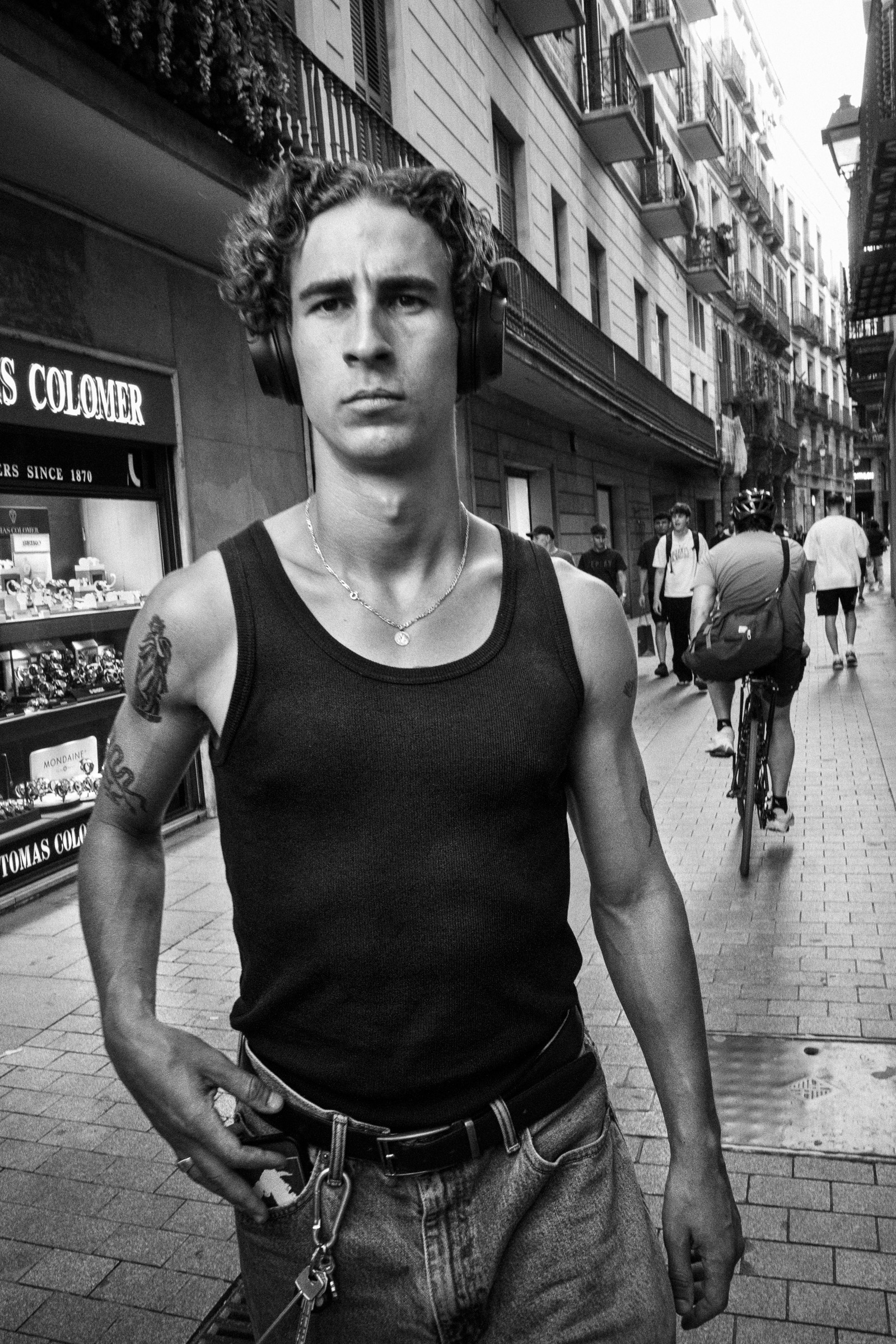
A few portraits from Barcelona, taken over the weekend.
Close faces. Shopfronts. Glass. Traffic. Tired walls. People holding their place while the city keeps pushing behind them.
These are not quiet portraits, even when nothing dramatic is happening. That is partly why I like them. Nobody is performing much, but the frame still feels crowded: hands, eyes, cheap objects, passing bodies, the small pressure of the street.
I am not looking for grand character studies here. No heroic street mythology. Just people seen at close range, with very little room to become elegant.
Some look straight back. Some seem half elsewhere. The city does not soften around them. It stays there: dirty, busy, indifferent, useful.
This small weekend series sits inside Portraits, close to the rougher edge of StreetSoul. More this weekend.
Technical note: Ricoh GR IV Monochrome.