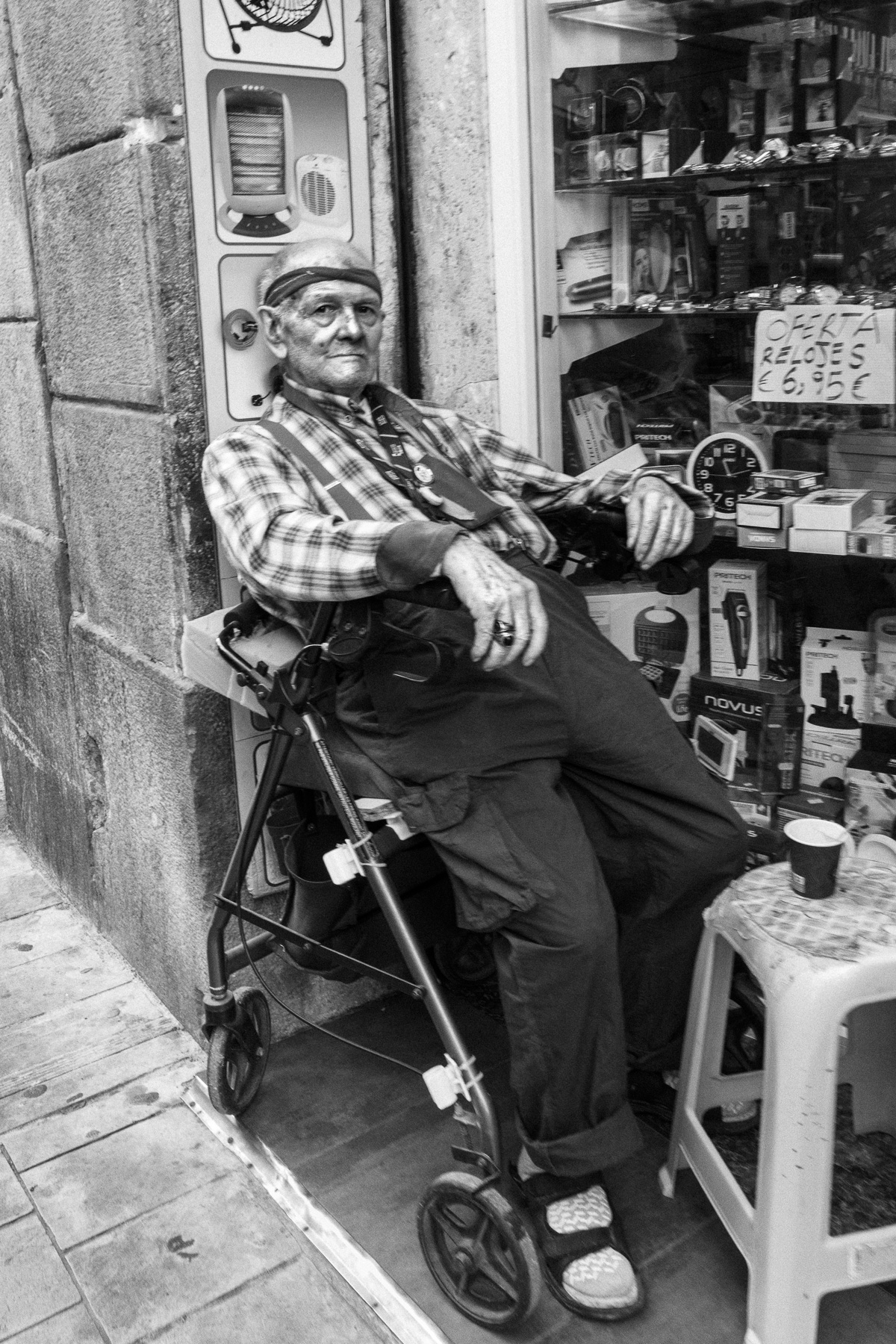

This week began with faces, bodies and doorways. Not portraits in the polite sense. Nobody was arranged, softened, rescued or turned into a small monument of dignity for the comfort of the viewer. The camera stayed close to the edge of the street: entrances, shopfronts, walls, bad light, tired hands, cigarettes, walkers, plastic stools, small signs, objects waiting longer than people.
The fifth portrait sits at the end of that line.
An older man rests outside a small shop. A walker stands in front of him, almost more frontal than the body itself. Behind him, the window is full of clocks and small objects, the kind of things that belong to shops where time seems to have stopped out of habit, not nostalgia. A handwritten sign announces watches on sale.
Time is cheap in the window. Waiting is not.
That small joke is what keeps the photograph from becoming too solemn. The frame has enough weight already: the seated body, the walker, the shop entrance, the crowded glass, the stool, the cup, the little domestic debris of the pavement. Everything is slightly too much, and that is why it works. The city does not give the man a clean background. It gives him inventory.
The five portraits from this week have been circling the same problem: how a body occupies a narrow piece of public space when there is no proper place to be. A doorway becomes a chair. A wall becomes support. A shopfront becomes weather. The street does not stage these things. It just leaves them there, badly lit and perfectly clear.


Next week, the frame opens wider.
The portraits will give way to a Barcelona street series: less face, more city; less individual tension, more pavement, shutters, glass, crossings, corners and people reduced to the size the city allows them. Not Barcelona as postcard. Not Barcelona as Mediterranean mood with clean typography and rental prices from another moral universe.
Barcelona as pressure.
This photograph stays between both weeks. It belongs to the portraits, but it already points beyond them. The man is there, unmistakably, but the shop window is also there, doing its quiet damage. The clocks, the walker, the sign, the pavement. A whole city compressed into a bad little arrangement nobody designed and nobody will fix.
The street keeps excellent records.
It just refuses to file them properly.

Leave a Reply