Category: Sense categoria

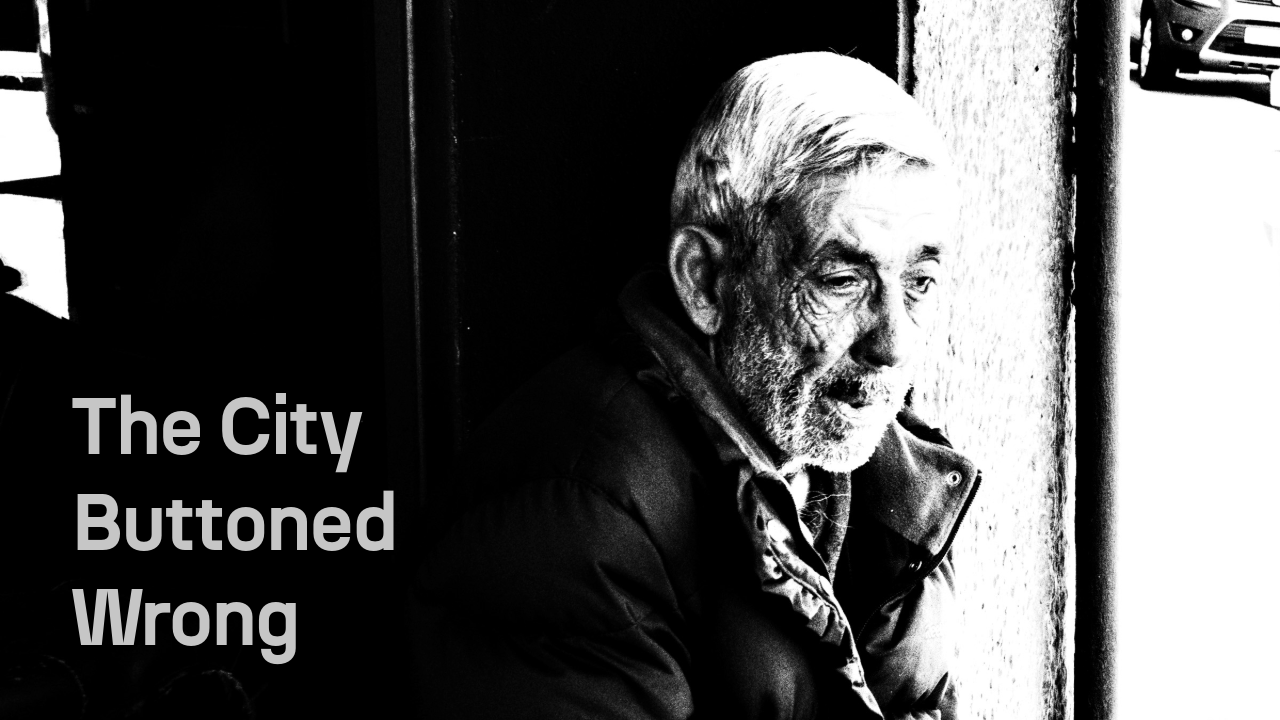
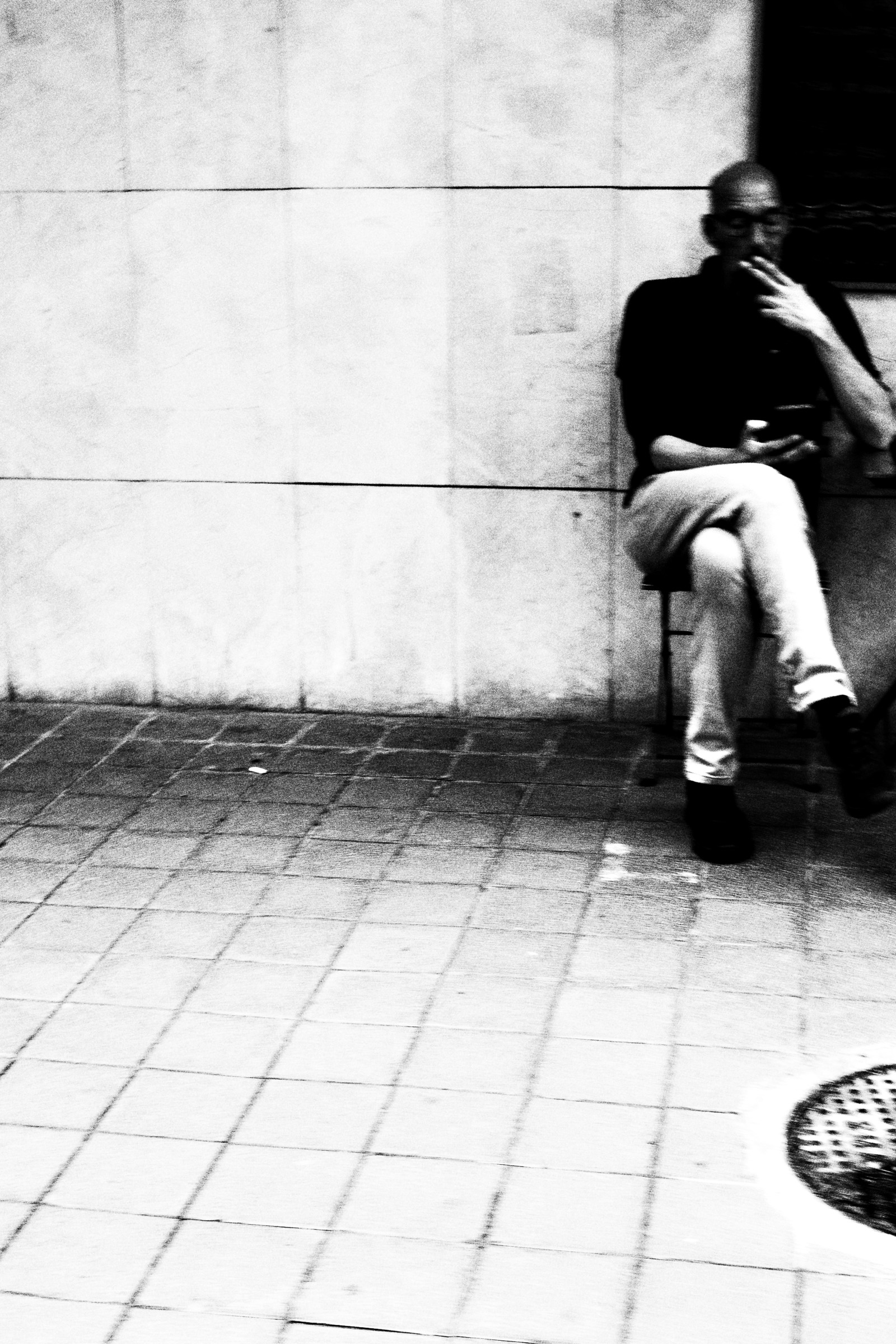
  • The face arrived first

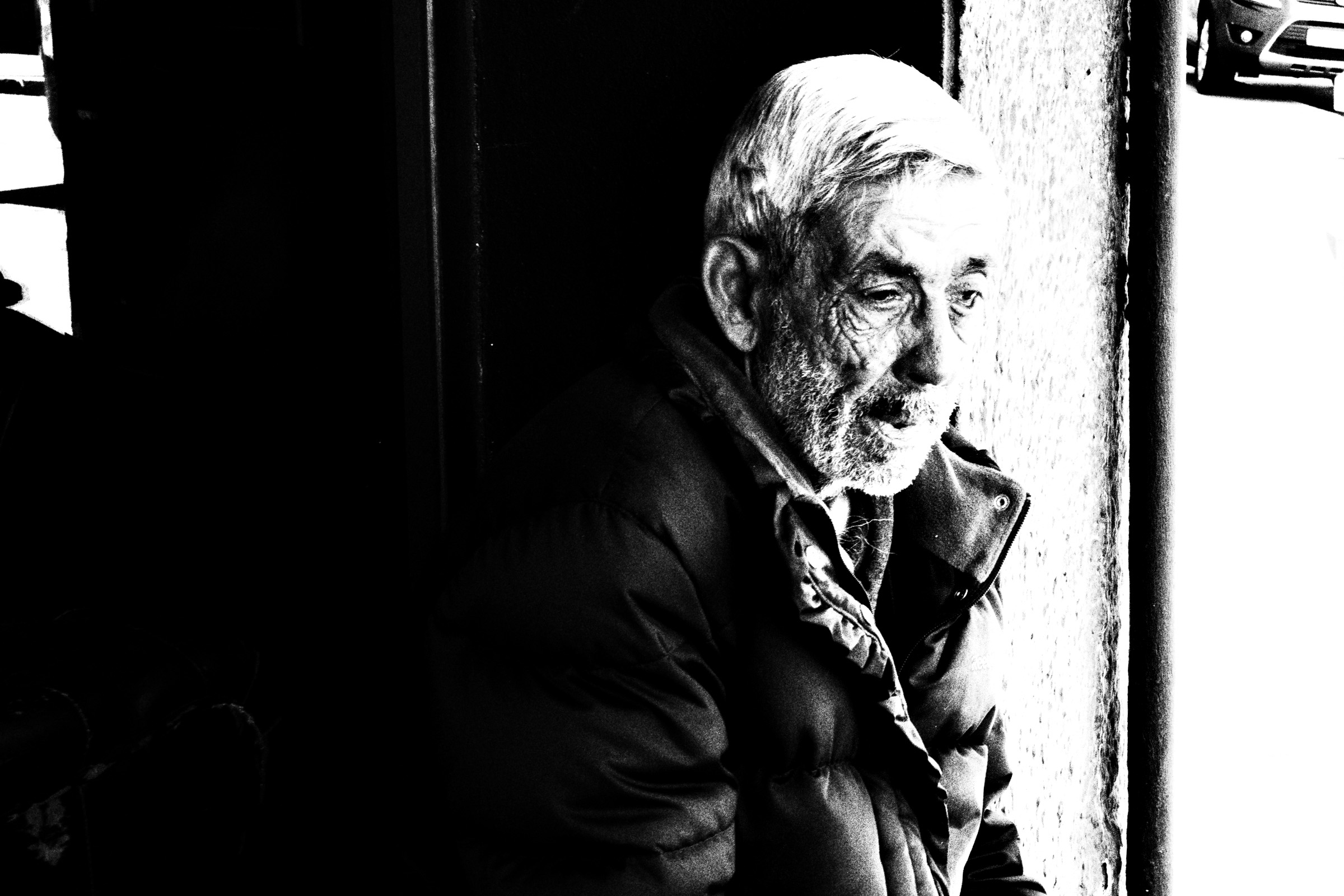
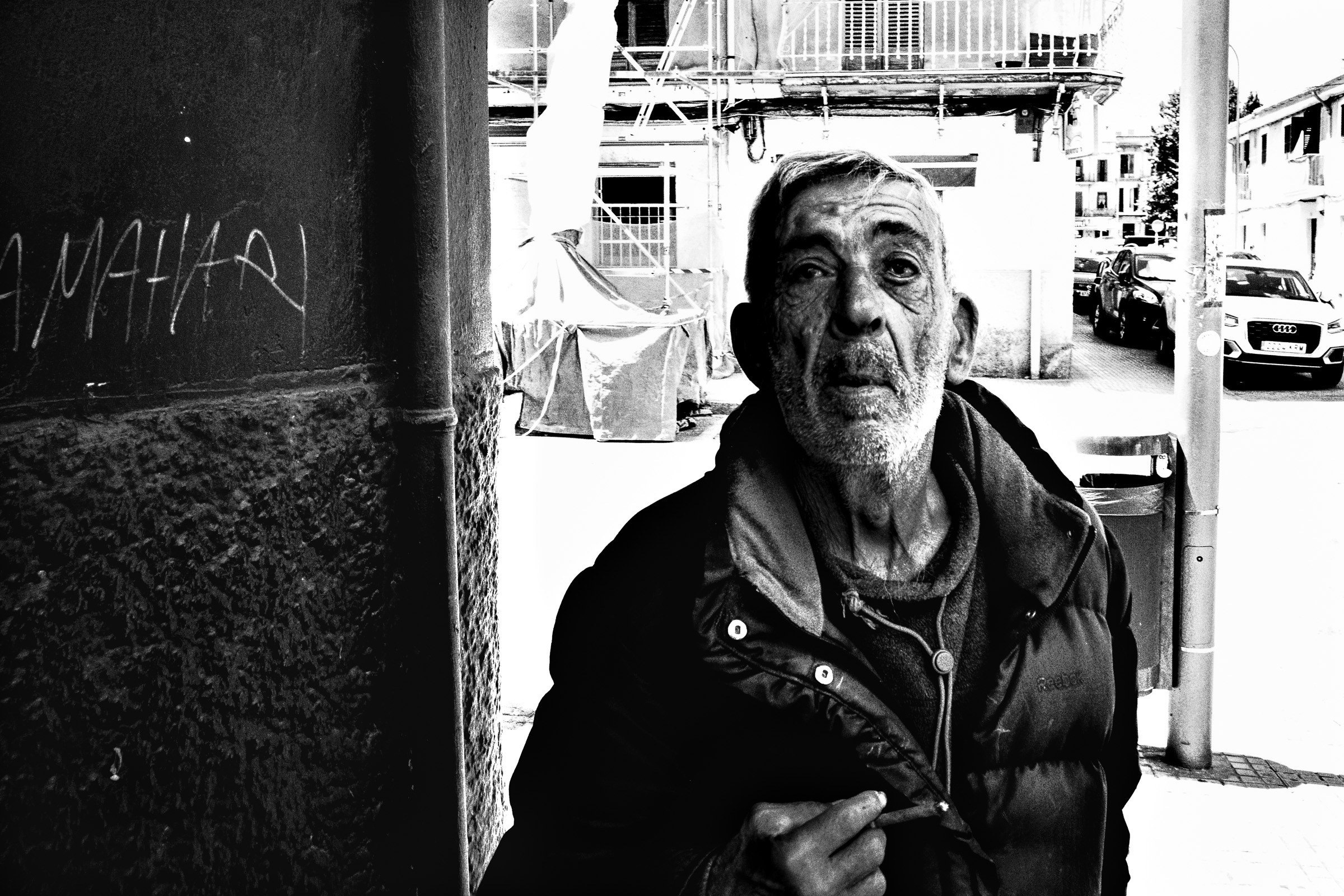
    The face arrived first

    The city came after, burned white and badly behaved.

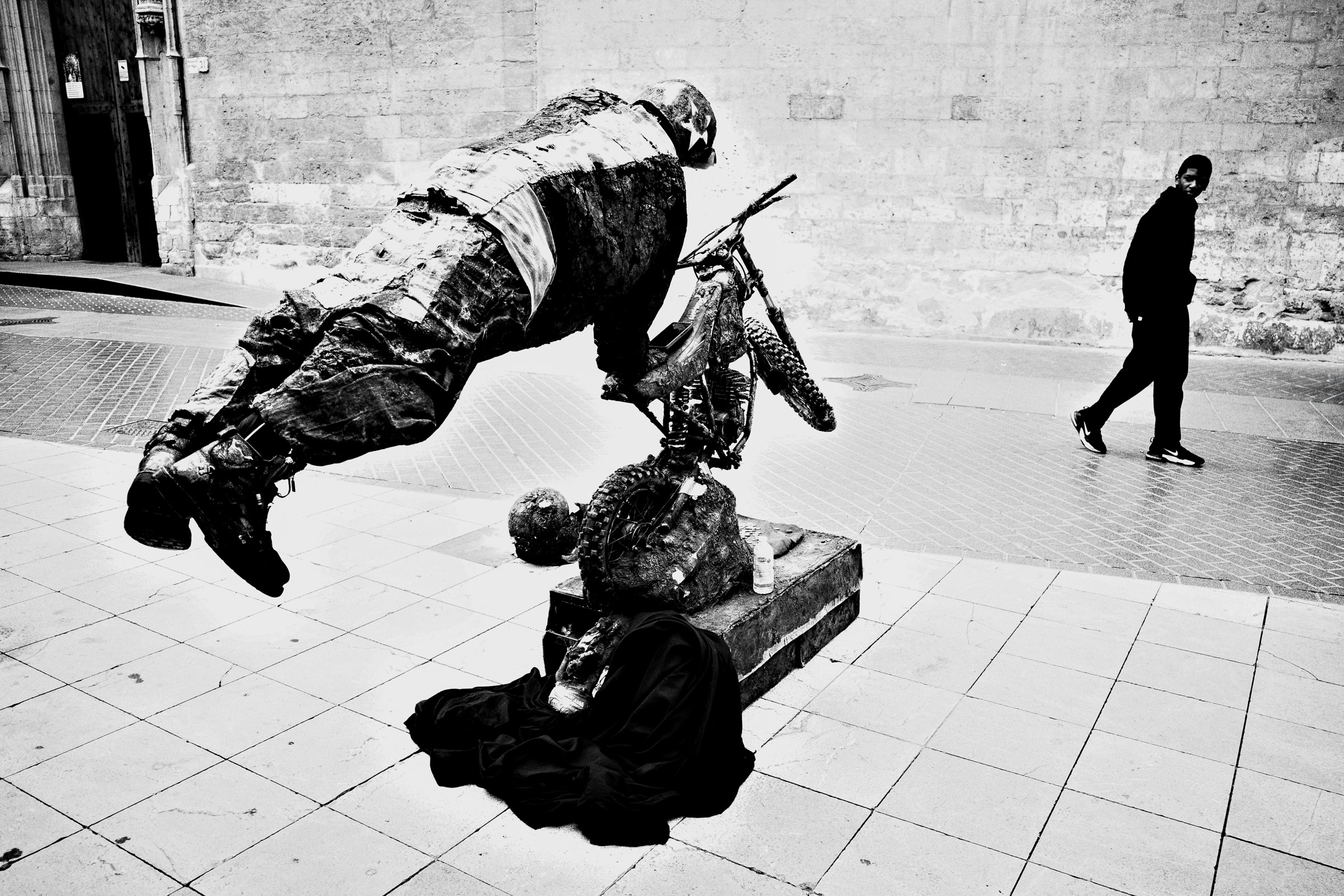
    Shot with the Ricoh GR IV Monochrome, close enough for comfort to become useless. The frame is dirty in the right places: wall, glare, scaffolding, parked cars, a hand holding the jacket as if the day might fall out of it.

    Provoke is not decoration here. It is pressure. Too much light. Too little distance. A face that does not soften for the camera.

    Nothing heroic.
    Nothing solved.
    Just the street, doing its usual damage.

    Provoke Archive here.

  • Diez horas con Cristina García Rodero: Staying Until the Image Changes

    Diez horas con Cristina García Rodero: Staying Until the Image Changes

    Cristina García Rodero reaches rituals before they harden into explanation.

    She does not photograph rituals as if they were museum pieces. She gets close to them while they are still sweating.

    Her images are full of bodies caught in awkward states: belief, fatigue, laughter, fear, devotion, embarrassment, trance. People kneel, dance, carry saints, stare, hide, push through crowds, lose themselves for a second. Nothing sits still for long. What first looks like tradition soon turns into theatre, then into tension, then into something harder to name.

    Diez horas con Cristina García Rodero, published by La Fábrica in its Archivo de Creadores series, is built as a long conversation rather than a conventional photobook. That is a sensible choice. Her photographs do not need someone standing beside them explaining what they mean, like a nervous museum guide. The book works better than that. It lets her talk about time, work, memory and stubbornness: the things that usually stay outside the frame.

    García Rodero is often described through large, respectable words: ritual, faith, tradition, popular culture, documentary photography. They are not wrong. They are just a little too clean. Her work is messier than those labels suggest. Spain already had fiestas, processions, masks, animals, saints, coffins, children, old women, smoke and noise. She did not invent that world. She stayed with it long enough for it to stop behaving like folklore.

    That patience is the real subject of the book. The conversation shows how much of her photography comes from returning, waiting, watching and accepting discomfort. The strongest images do not feel stolen. They feel earned. García Rodero does not seem interested in the quick prize, the tidy symbol, the obvious gesture. She waits for the moment when the scene slips, when everyone is still inside the ritual but something human leaks through.

    The book also helps explain why her photographs hold so much contradiction without needing to resolve it. The sacred is never far from the grotesque. Beauty turns up crooked. Death comes decorated. Faith has sweat on it. Children stand near masks that look older than the village itself. A crowd can protect a body and swallow it at the same time. In weaker hands, this material would become exotic or sentimental. García Rodero keeps it unstable.

    That is why her work still speaks to documentary and street photographers. Not because it offers a style to imitate. Imitating García Rodero would be a fine way to produce loud, empty pictures. What matters is the method: stay longer, look harder, distrust the obvious. Attention, in her case, is not politeness. It is pressure. She keeps looking until the scene gives up its first explanation.

    The volume is small, but it has weight because it avoids turning her into a monument. That is no small achievement. Photography culture can be terribly good at embalming its own legends while pretending to celebrate them. Here, García Rodero remains active, specific, practical. She talks like someone who has worked, not like someone posing beside her own myth.

    This book should be read beside the photographs, not instead of them. The images still need to be faced directly. But the conversation changes the way one returns to them. It makes the work feel less miraculous and more demanding. Not smaller. Better.

    García Rodero has spent decades photographing people at the point where ritual stops being decoration. What appears in her pictures is not simply tradition. It is behaviour under strain, belief under heat, bodies trying to hold a form while life keeps pushing through.

    You can buy the book here with 5% discount and free shipment.

    People participating in a religious procession, carrying statues through a shallow river, surrounded by greenery and trees.
    A group of people running along a shoreline as a bull approaches the water, with others swimming nearby and boats in the background.
    Black and white photograph of a group of six individuals in traditional Mexican attire, posing in front of a textured stone wall.
  • What StreetSoul Is

    What StreetSoul Is

    StreetSoul is now on YouTube.

    The first video is a short introduction to the project: black and white street photography, hard light, strange gestures, public tension, failed frames, and the ordinary absurdity of urban life.

    No motivational speeches.
    No gear worship.
    No cinematic sludge.

    Just the street, in black and white, behaving badly enough to be useful.

  • The House Lost the Argument

    A woman walking a dog past a modern sculpture in an urban setting during twilight.
    Ricoh GR IV Monochrome.

    Some public spaces try to look elegant. This one looks as if gravity arrived late and still managed to win.

    A house-like structure hangs over the square at the wrong angle, too large to ignore and too absurd to fear. The sky makes no attempt to calm it down. Clouds gather behind the shape with the committed seriousness of bad news.

    Below it, a person walks a small dog.

    That is where the frame begins to work: not in the theatrical lean, but in the small refusal to be impressed. The city stages an architectural collapse. The dog keeps moving. The leash cuts through the scene with a plain domestic fact: someone still has to get home.

    Black and white strips away the easy decoration and leaves weight, pavement, cloud, silhouette. The tilted structure wants to dominate the frame. It almost does. Then the dog walks in and reduces the whole performance to a civic tantrum.

    No monument gets the final word when a small dog has decided the walk is not over.

    More from Absurd World.

  • The Names Left in the Margin

    The Names Left in the Margin

    Daily writing prompt
    Who are some underrated people in history?

    History often reads like a contact sheet edited by cowards.

    A few faces are circled in red. The rest are left on the table: blurred, inconvenient, badly timed, not respectable enough, not male enough, not white enough, not easy enough to print. Ask who is underrated in history and the answer is not a clean ranking. It is a drawer full of people who did the work while someone else got the frame.

    Claudette Colvin was fifteen when she refused to give up her seat on a segregated bus in Montgomery in 1955, months before Rosa Parks became the name most people remember. Colvin was not a footnote; she later became one of the plaintiffs in the case that helped end bus segregation in Montgomery. But history prefers a neat portrait. Teenagers, anger, poverty, complexity — these things make the picture harder to hang.

    Alice Ball was twenty-three when she developed a workable treatment for leprosy using chaulmoogra oil, before antibiotics changed the field. She died young. Other people had more time to stand near her work and look important. Chemistry is not photogenic, especially when the chemist is a young Black woman in early-twentieth-century Hawaiʻi. So the room goes quiet, and the discovery keeps working without applause.

    Bayard Rustin helped organize the 1963 March on Washington and advised Martin Luther King Jr. on nonviolent resistance. He also lived openly as a gay man in a movement and a country that punished him for it, which helped push him into the background. The crowd gets remembered. The man who helped build the conditions for the crowd is easier to crop out.

    Noor Inayat Khan was a British resistance agent in Nazi-occupied France. For several months in 1943, she was the only British intelligence agent operating in the Paris area, sending wireless messages to London. Captured, imprisoned, and executed at Dachau, she did not give up Allied secrets. Her story does not need embroidery. The facts are already dark enough.

    Mary Anning spent her life pulling fossils from the cliffs of Lyme Regis, doing work that helped shape modern science while respectable men owned most of the rooms where science was allowed to speak. The Natural History Museum describes her as a pioneering palaeontologist whose contributions remained relatively unknown until recently. There is something almost comic about that sentence. She found ancient animals. The present took nearly two centuries to find her.

    Chien-Shiung Wu led the experiment that overturned the supposed conservation of parity in beta decay. The Nobel Prize went to the theorists Chen Ning Yang and Tsung-Dao Lee. Wu’s name remained attached to the experiment, which is polite; the prize remained unattached to her, which is the usual paperwork of power.

    Maybe “underrated” is too soft a word. It sounds like a restaurant review. These people were not merely underrated. They were delayed, thinned, cleaned up, misplaced, or pushed behind a better-lit figure.

    History has always loved a central subject. Street photography teaches the opposite: sometimes the truth is the person half-cut by the edge of the frame, the one almost missed, the one who did not turn toward the camera.

    The archive is not finished. It just pretends to be.

    More Provoke work here.

  • Waste an Afternoon Properly

    Waste an Afternoon Properly

    Daily writing prompt
    Which is the best thing to do in your city?

    People ask what the best thing to do in a city is, as if a city were a hotel breakfast with a laminated menu.

    In mine, the best thing is to walk until the official city loses interest in you.

    Forget the obedient circuit: square, church, museum, queue, ice cream, ticket, tiny photograph proving you were alive for six minutes. That kind of tourism has the emotional depth of a parking ticket. The city is not there. The city is where the pavement heats up, where the fountain talks to itself, where the trees rise in a dark line like undertakers waiting for the next public ceremony.

    Then someone passes by on a skateboard, shirtless, cap pulled low, carrying the whole afternoon on his shoulders.

    Nothing dramatic happens. That is the point.

    The skateboard goes rrrrr. The water spits. A shadow stretches across the slabs with more elegance than most elected officials will manage in an entire lifetime. The scene lasts less than a second and refuses to explain itself. Perfect. Explanations are where mediocre photographs go to die.

    I like the parts of the city that have not yet been fully tamed. The edge of a square. The side of a fountain. Bored young people. The man smoking with the face of a defeated empire. The dog that has understood traffic better than its owner. The places where people do not pose and, precisely because of that, reveal more than they would like.

    A city is not honest when it shows you its monuments. It is honest when it is busy doing something else.

    Go out when the light is rude. Stand in the wrong place. Wait. Let the city drag its small ordinary miracles in front of you: a skater, a fountain, a bad haircut, a nervous laugh, a leaf of shadow cutting the pavement in half.

    You do not need a plan. Plans are what people invent when they are afraid to look.

    The best thing you can do in your city is waste time properly.

  • Peace Has Teeth

    Peace Has Teeth

    Daily writing prompt
    What super power do you wish you had and why?

    I wouldn’t ask for flying. I’ve seen enough people looking down from balconies, offices and pulpits to know that height rarely improves anyone. It mostly gives stupidity a better view.

    Invisibility is tempting, but it feels redundant. Most people have already mastered disappearing behind manners, job titles, passwords, perfume and that little social smile that says absolutely nothing and gets invited everywhere.

    No. I’d want the power to make false words lose their teeth.

    Put me in front of a slogan, a promise, a campaign, an apology, a patriotic speech, a spiritual brochure, any of those polished little lies humans frame and hang on the wall, and I’d make it open its mouth. If there is truth inside, let it breathe. If there isn’t, let everyone see the gums.

    Peace should not need bulbs, boards, sermons or a mouth big enough to bite the room. Real peace can stand in the dark without advertising itself. Fake peace usually comes with typography.

    That would be my superpower: not saving the world, because the world has shown an impressive talent for resisting rescue, but making fraud visible. A modest miracle. Almost practical, which is why nobody would fund it.

    More Provoke frames here.

  • Life Is Trolling. Make It Sweet.

    Life Is Trolling. Make It Sweet.

    Daily writing prompt
    What gives you direction in life?

    What gives me direction in life?

    Not a five-year plan. Not a motivational quote printed over a fake mountain. Not some clean little compass sold by people who say “mindset” with the solemnity of undertakers. Direction, in my case, comes from walking until reality trips over itself and accidentally tells the truth.

    Here, for example, a woman passes through the frame as if she has just remembered she is late for her own life. She is blurred, half-present, already leaving. Behind her, on the wall, someone has written the kind of sentence that sounds stupid until you realise it is probably the most accurate theology available in the neighbourhood: “Life is trolling. Make it sweet.”

    Beside the words, an old painted man with a walker points nowhere in particular. A prophet, naturally. Not one of those expensive prophets with a podcast and white teeth, but the better kind: thin, black, badly sprayed, anonymous, and nailed to a wall on a street corner. His message is not “follow your dreams.” His message is: you will slow down, you will need support, the pavement will remain indifferent, and still you may as well keep moving.

    That gives me direction.

    The city does not explain itself. It drops clues. A shadow. A gesture. A woman turning her face. A bin placed exactly where dignity goes to retire. A sentence written by someone who may have been drunk, lucid, desperate, or all three, which is often the same artistic department with different office hours.

    I do not trust grand answers. Grand answers are usually furniture for empty rooms. I trust friction. I trust the small humiliations of the street. The unexpected joke. The bad wall. The passing body. The fact that everything serious eventually has to share space with rubbish bags, scooters, delivery vans, chewing gum, and someone shouting into a phone as if history were customer service.

    Direction is not certainty. Certainty is for GPS devices and fanatics, two species that speak too confidently and recalculate badly. Direction is a bias toward attention. It is choosing to look again when the world seems already used up. It is admitting that the scene in front of you, ugly and accidental, may know more than your tidy opinions.

    Photography helps because it refuses to let life become entirely abstract. You can have principles, ideas, ambitions, a whole private parliament of noble excuses. Then the street interrupts: a face cuts across the frame, the wall laughs at you, the light collapses, and suddenly everything you thought was important has to prove itself at 1/500 of a second.

    That is a useful cruelty.

    Hope is fine, but it has been overmarketed. I prefer appetite. The appetite to keep noticing. To keep walking. To keep finding sweetness in the troll, because bitterness is too obedient. Bitterness does exactly what the world expects of a person who has been paying attention. Sweetness, when it is honest, is more insulting. It says: I saw the mess. I understood the joke. I am still here.

    So no, I do not have a luminous path. I have corners. Walls. Blurred strangers. Accidents. Bad advice that turns out to be good. A camera. A pair of tired eyes. The suspicion that the next street may be slightly less dead than the last one.

    That is enough direction for one life. More would probably become branding.

    More Urban Wildlife here.

  • Please Stop Stapling Faces to Sentences

    Please Stop Stapling Faces to Sentences

    Daily writing prompt
    What are your favorite emojis?

    My favorite emoji is probably the one I don’t use.

    Emojis are useful, yes, in the same way plastic cutlery is useful: quick, clean, disposable, and slightly depressing if you think about it for more than seven seconds. They arrive already emotionally assembled. A tiny yellow face tells the world what you are supposed to feel before you have had the decency to feel it properly.

    The problem is not the emoji. The problem is the abuse. A sentence followed by seven little faces begins to look less like communication and more like a hostage note from a phone keyboard. Joy, sadness, irony, tenderness, embarrassment: all flattened into a municipal catalogue of approved reactions. Human beings spent centuries inventing literature, painting, photography, music, silence, the raised eyebrow, and then decided that a winking yellow circle would do the job. Sensible species, obviously.

    So, no, I don’t have a sacred top ten. I can tolerate a few. The skull, because at least it admits everything is ridiculous. The black heart, because it has the courtesy not to pretend. The camera, naturally, because some clichés pay rent. But my favorite remains absence: the blank space where the emoji could have been, forcing the sentence to stand on its own two miserable legs.

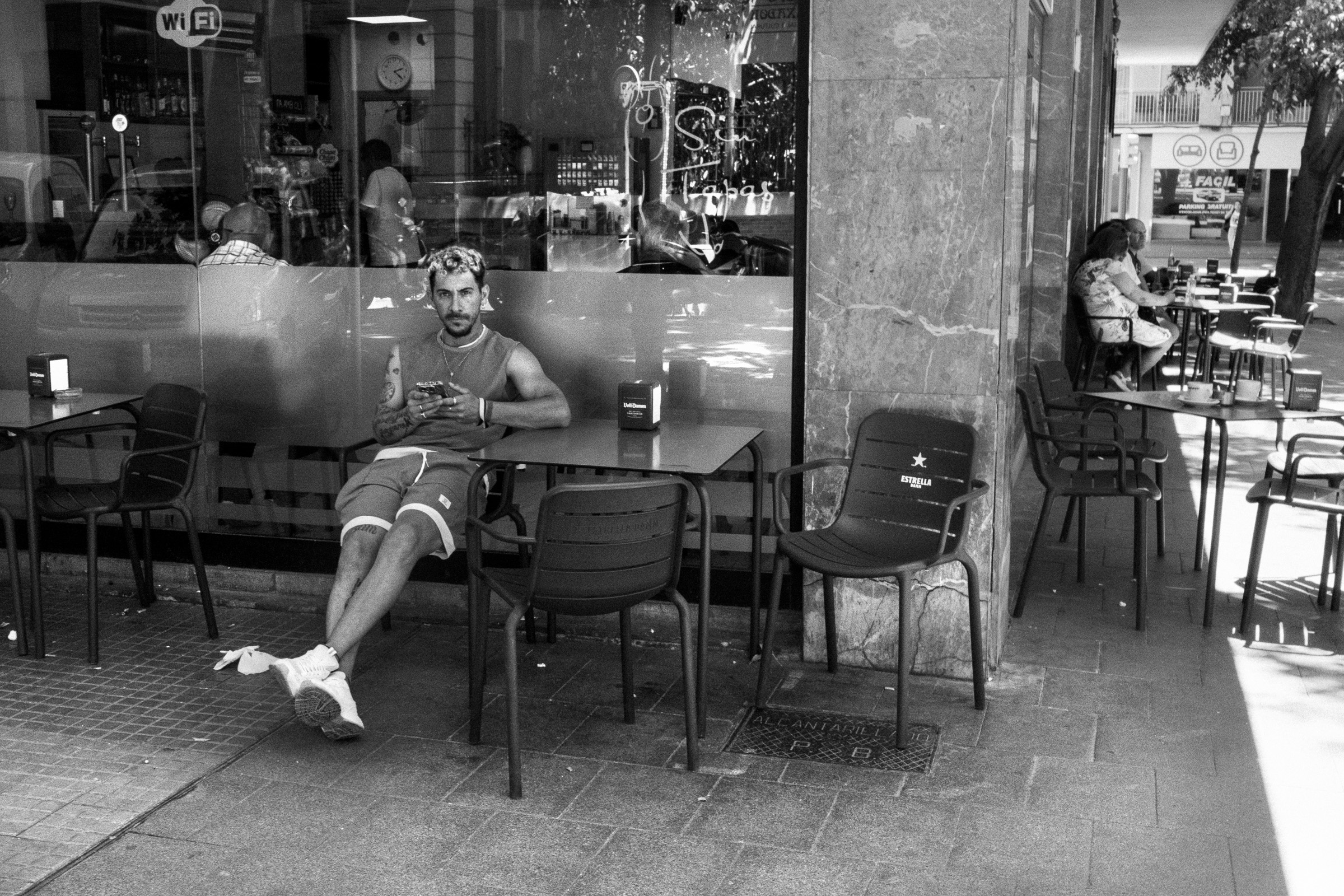
    This photograph says it better than I can. Sunglasses, cigarette, phone, menu behind me, the face of a man apparently being held against his will by modern communication. No emoji required. The expression is already doing the dirty work.

    More portraits here.

  • España oculta, by Cristina García Rodero: the country that kept praying after the lights came on

    España oculta, by Cristina García Rodero: the country that kept praying after the lights came on

    There are books that explain a country, and then there are books that catch it with its mouth open, its knees dirty, its saints sweating, and its dignity somewhere between devotion and delirium. España oculta, by Cristina García Rodero, belongs to the second, more dangerous category. Published by Lunwerg in 1989, with 126 pages of black-and-white photographs, the book appeared in connection with an exhibition at the Museo Español de Arte Contemporáneo.

    García Rodero began this long pilgrimage in 1973, thanks to a Fundación Juan March grant that allowed her to travel through Spanish villages and document their festivals, ceremonies, rites, traditions, and ways of life. That bureaucratic miracle, for once, produced something other than paperwork. It produced one of the great photographic books of modern Spain.

    The book is anthropological, yes, but only in the way a confession, a wake, or a village drunk can be anthropological: because nobody there is trying to become material for a thesis. García Rodero does not photograph folklore as decoration. There is no postcard Spain here, no charming old ladies arranged for cultural consumption, no rural souvenir for people who like poverty provided it comes with good framing. Her Spain is physical, contradictory, theatrical, wounded, funny, devout, obscene, tender, and frightening, often all within the same frame.

    There is wool, wax, sweat, poor lighting, black shoes, children who already look as if they have understood too much, old women with faces like folded maps, men carrying saints as if carrying furniture for the afterlife. There are processions, masks, bodies, animals, priests, mourners, dancers, villagers, cripples, brides, corpses, boys staring too hard, and faces that seem to have been waiting for the camera since the Council of Trent.

    The black and white is not an aesthetic preference. It is a moral weapon. Colour would have made many of these scenes picturesque, and picturesque is usually where truth goes to be embalmed. In monochrome, everything becomes bone, cloth, skin, dust, shadow, gesture. Faces do not appear; they emerge. Bodies do not pose; they endure. Nobody is decorative here. Not even the children. Especially not the saints.

    The title, España oculta, is perfect because it does not name an unknown Spain so much as a Spain that polite Spain preferred not to see. The hidden thing was not buried. It was walking down the street under a hood, kissing a relic, dragging itself through mud, throwing itself into a festival, or staring back at the camera with the grave suspicion of someone who knows perfectly well that modernity is just another costume, slightly better ironed.

    Magnum has described García Rodero’s work as deeply concerned with human dualities and contradictions: religious and pagan, natural and supernatural, life and death, pleasure and pain, city and countryside, old and new. That is accurate, though a little too clean. In España oculta, what we really see is a Catholicism full of pagan elbows, a joy that looks like mourning, a mourning that has learned to dance, and a country capable of kneeling without ever quite becoming humble.

    The strongest thing in the book is García Rodero’s patience. She understands that a photograph is not made by arriving. It is made by staying. She does not parachute into tradition, steal a little exoticism, and leave before lunch. She waits. She lets the ritual become tired enough to reveal the human being inside it. That is why the images are not merely “about customs.” They are about hunger, shame, pride, fear, boredom, desire, childhood, old age, and that national talent for surviving while pretending everything is normal.

    The project’s importance was recognized quickly. España oculta won Book of the Year at Rencontres d’Arles, and García Rodero also received the W. Eugene Smith Fund Grant in 1989. Awards are the least interesting part of the matter, as usual, that official confetti people throw when art has already done the damage. But in this case the recognition was deserved.

    What remains, after closing the book, is not nostalgia. Nostalgia is too comfortable, too upholstered. What remains is the unpleasant sensation that modern Spain did not replace this hidden Spain. It merely painted the walls, installed better lighting, opened a shopping centre nearby, and asked the old ghosts to stand slightly off-camera.

    You can purchase this masterpiece here with free shipping and a 5% discount.